Language access

295+ language access options

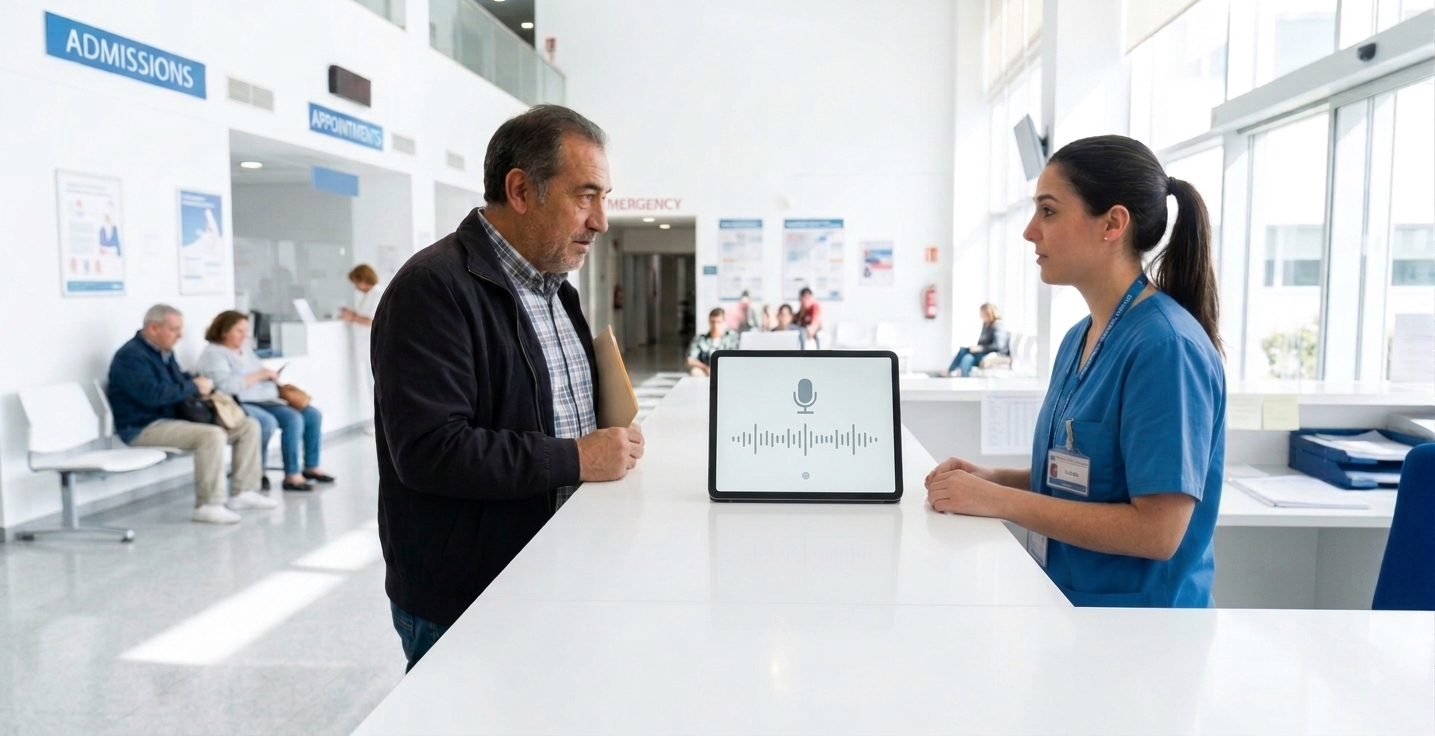
No Barrier’s medical interpreting platform enables real-time communication across 295+ language access options in clinical settings, from intake to complex encounters. It integrates directly into care workflows on any connected device, so clinicians can communicate with LEP patients instantly and consistently.
295+
Language access options
3 min
Saved per encounter
50%
Lower cost
Supported languages

Which languages does
No Barrier support?

No Barrier covers 295+ language access options across every major region, including regional dialects, of which 45+ are powered by AI medical interpreting.

Portuguese

2 variants
Portuguese (Brazil)
Portuguese (Portugal)

Asian & South Asian

13 languages
Mandarin
Cantonese
Japanese
Korean
Vietnamese
Tagalog (Filipino)
Thai
Hindi
Urdu
Punjabi
Bengali
Nepali
Burmese

European

10 languages
Albanian
Armenian
Georgian
German
Greek
Italian
Polish
Romanian
Russian
Ukrainian

Middle Eastern & African

11 languages

Caribbean

1 language
Would you like to learn more about a specific language? Reach out to us.
Trusted by care teams

"It is vital to providing optimal care to be able to communicate a diagnosis, a treatment plan and what to do moving forward. When you cannot do that, everything else suffers."

Dr. Gezzer Ortega
Assistant professor of surgery, Center for Surgery and Public Health, Mass General Brigham
Care Culture Talks, No Barrier
Frequently Asked Questions
about Language Coverage
Q1.
Are Haitian Creole and Tagalog supported?

Yes. Haitian Creole and Tagalog are both included in No Barrier’s 295+ language access options, as well as 5 dialects of Spanish, the top requested language in the US. To request the full language list, contact us with the subject line “295+ language access options” and our team will send it over.

Q2.
How does a health system increase adoption and usage?

Adoption grows fastest when health systems lead with change management, not just technology rollout. Identifying frontline champions in high-volume departments and giving them early access builds trust that spreads to the rest of staff. No Barrier supports this with recorded training, live Q&A and reference guides so staff ramp at their own pace, backed by real-time correction that builds trust faster than a black-box tool.

Q3.
How do you decide between AI and human interpreting?

The decision does not need to be binary. No Barrier offers 295+ language access options within one interface, so patients and providers choose based on comfort level and the nature of the conversation rather than switching tools or devices.

Q4.
What’s the saving by switching to flat-rate interpreting billing?

Per-minute billing creates a pressure that discourages staff from using interpreting as often as patients actually need it. No Barrier’s flat monthly subscription removes that dynamic entirely, letting health systems budget language access as a predictable line item rather than a cost that grows with patient volume, with organizations reporting up to 50% lower cost than per-minute billing.

Q5.
What equipment does AI interpreting require in a clinic setting?

No Barrier does not require any new hardware since the platform works on existing kiosks, laptops or tablets a clinic already has in place. Some health systems choose to add dedicated iPads for patient-facing use, but that is a preference for availability, not a technical requirement, which keeps implementation lightweight for any health center regardless of budget.

Know your top 20 patient populations?

See how No Barrier delivers instant language access across every one.