AI‑Interpreting for Healthcare: Compliance, Clarity & Care

Machine interpreter services powered by AI for routine, low-risk conversations driving patient safety, ROI and operational efficiency.

Ai-Interpreting

The Hidden Cost of Language Barriers & Manual Interpreter Workflows

Healthcare organisations continue to face three growing risks driven by language barriers.

Without a scalable, tech‑enabled solution, these gaps persist, impacting patient experience, regulatory risk and bottom‑line performance.

Compliance & liability

Compliance & liability

Patients with Limited English Proficiency (LEP) face higher risk of adverse events when communication fails.

Operational drag

Interpreter delays, scheduling mismatches and inefficient workflows increase wait times and clinician idle time.

Financial leakage

Poor language access undermines throughput, increases readmissions, 
and weakens ROI metrics.

Compliance & liability

Compliance & liability

Patients with Limited English Proficiency (LEP) face higher risk of adverse events when communication fails.

Financial leakage

Poor language access undermines throughput, increases readmissions and weakens ROI metrics.

Operational drag

Operational drag

Interpreter delays, scheduling mismatches and inefficient workflows increase wait times and clinician idle time.

How Our AI‑Interpreting 
Platform Responds

No Barrier is designed for healthcare settings and delivers a three‑layer solution:

Real‑time AI‑assisted interpreting access
Instant access to 30+ AI languages and dialects, speech recognition, reducing wait times from minutes to seconds.
Compliance
by
design
Built for HIPAA and SOC2 compliance.
Operational & 

financial impact 

Enables faster throughput, fewer interpreter “hunting” minutes, improved patient satisfaction and reduces 
cost by 70%.
Human
escalation
Connected with your
current provider when
human translation
is needed.

Evidence. Compliance. Trusted.

24/7

instant interpretation
with AI right on your tablet

40+

language and
nuance dialects

100

medical institutions already deployed
No Barrier in the USA

Proven outcomes: AI Medical Interpreter Service case studies

Real-world results from clinic teams using No Barrier AI

Regulatory Reminder: the Office for Civil Rights (OCR) mandates language access under Title VI and the Centers for Medicare & Medicaid Services (CMS) conditions of participation, making language‑services a compliance priority.

In addition, in July 2025 the America’s AI Action Plan was released by the White House, outlining more than 90 federal policy actions across three strategic pillars: accelerating AI innovation, building domestic AI infrastructure and leading globally in AI diplomacy and security.

For healthcare organisations, this means that AI‑enabled language access solutions must align not only with HIPAA and Title VI obligations, but also with evolving federal expectations around AI governance, data integrity, bias mitigation and audit‑trail transparency.

How the No Barrier AI Interpretation Works

With the current iPads, tablets or any connected device you already have and a good wifi connection

1

Select Language and Gender:

at the start of the encounter, the care team selects the patient’s preferred language from 40+ supported options including dialects, ensuring cultural and linguistic accuracy.

2

Start the Conversation:

No Barrier enables a hands‑free, voice‑driven interaction. Clinicians and patients speak naturally while AI routes speech in real time reducing delays, manual tasks and interpretation friction.

3

Show Key Terms with Visual Support:

as complex medical terms arise, the system displays visual aids tied to key concepts helping patients understand conditions and procedures
more clearly.

4

Auto‑Generate Bilingual Discharge Notes:

at the end of the visit, the platform automatically creates a discharge summary in both English and the patient’s language.

End Nurse Practitioner Burnout for Good
Instant communication with the patient through No Barrier on the encounter tablet

End Nurse Practitioner Burnout for Good

As you can see, the tablet runs the No Barrier AI interpreter. The clinician and the patient can speak freely and hands free. No third party is needed. Each person simply talks in their own native, comfortable language. No Barrier also highlights important medical terms and it displays helpful images to illustrate complex concepts. This ensures the patient fully understands their care process.

No Barrier AI Interpretation Features

40+ language and dialects available in one tap

High Technology speech-to-speech

Visual supports for medical terms

Hands-free for a natural conversation

Executive‑Led Innovation. Built for Healthcare.

Meet our leadership
Eyal Heldenberg

Eyal Heldenberg

CEO and Co-Founder
15 yrs AI speech-to-speech voice technology
Ilan Shapiro

Ilan Shapiro

MD MBA FAAP FACHE
Medical Advisor
Question-icons

In high‑stakes care settings, clarity of communication is non‑negotiable. AI‑interpreting delivers it. At scale, with auditability, and without compromise.

Quote from Eyal, No Barrier CEO

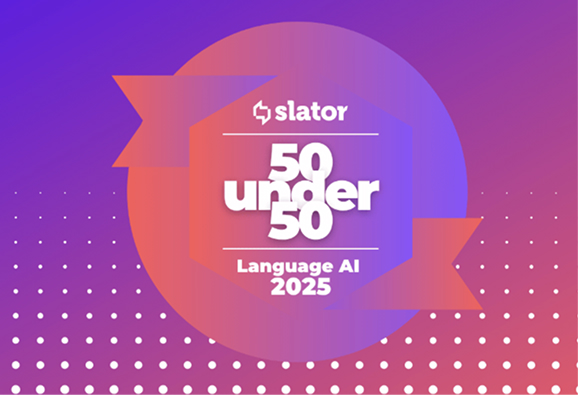
2025 Recognition in Slator

Leading source of research and market intelligence for
translation and interpretation
Slator’s recognition

CMOs need a medical interpretation service that is instant, HIPAA-aligned and designed for LEP patients. Today, Modern Language AI can scale speech in real time while escalating high-risk moments to credentialed medical operators. Recognized in Slator’s 2025 Language AI 50 Under 50, No Barrier is a trusted partner delivering AI-powered interpretation and translation already proven in healthcare settings.

More about Slator’s recognition

24/7 medical interpreter service

Top questions, clear answers
What about patient privacy and HIPAA when using AI‑interpreting?
arrow

The platform uses end‑to‑end encryption and has isolated interpreter sessions to meet HIPAA and OCR language‑access requirements. Moreover, PHI is auto-deleted after 7 days except if agreed otherwise. No Barrier does not store patient data. 

How do we validate ROI in a language access investment?
arrow

We reference metrics such as interpreter wait time, scheduling errors, follow‑up appointment adherence, readmissions for LEP patients and interpreter utilization rate.

What about accuracy versus human interpreters?
arrow

AI-assisted interpretation has shown higher accuracy in routine clinical use, with human interpretation averaging around 75% accuracy. AI also ensures consistency across encounters, reducing variability and errors.
For sensitive discussions (like serious diagnoses or end-of-life care) certified human interpreters are preferred.

How do we manage liability and risk when introducing AI?
arrow

Governance is built‑in: transparency, auditable decision‑logs, continuous monitoring.

What languages are supported and how scalable is it?
arrow

Coverage includes 40+ languages powered by AI from Spanish to Tagalog to Haitian Creole... The AI platform scales across sites, ambulatory, inpatient and virtual channels, enabling standardisation of language access.

Let’s explore how AI‑interpreting can lower compliance risk, improve patient safety, increase throughput and deliver measurable ROI.

Book a Demo
Schedule Executive Demo
book a demo
Book a Demo
Last-reviewed date: Oct 2025