CAN Community Health operates over thirty health centers across six states and serves patients with limited English proficiency in dozens of languages, including large Haitian Creole speaking populations. In this episode Katy Wendel, VP of Care Delivery Innovation, walks through how her organization evaluates and adopts new AI tools through a dedicated AI steering committee, staff surveys and a training program built around recorded modules and live Q&A. She shares how identifying internal champions in specific clinics helped skeptical staff trust AI interpretation, how switching to a flat rate model saved the organization roughly $17,000 a year and how giving patients the choice between AI and a human interpreter kept care patient centered. The conversation covers governance, training design, cost and what health equity looks like day to day on the front line.

Care Culture Talks, No Barrier
Care Culture Talks, No Barrier
Care Culture Talks, No Barrier
Care Culture Talks, No Barrier
Care Culture Talks, No Barrier
Care Culture Talks, No Barrier
Care Culture Talks, No Barrier
Care Culture Talks, No Barrier
Care Culture Talks, No Barrier
Care Culture Talks, No Barrier
00:00 Introduction
01:00 Language access challenges at CAN Community Health
02:37 How CAN evaluates new healthcare technology
05:48 Handling AI skepticism and staff training
09:53 Measuring patient and staff satisfaction
12:33 AI versus human: where the conversation stands now
14:33 Liability, accountability and AI governance policy
18:16 Transcripts, images and patient education tools
20:18 Section 1557 and cost savings
22:43 Patient satisfaction scores and feedback
23:35 Best practices for cultural competence in language access
Health systems evaluating AI interpreting should look for a vendor built specifically for healthcare, not a general purpose translation tool adapted after the fact. No Barrier for instance is HIPAA and SOC 2 Type II certified, with human oversight and audit logs, covering 295+ language access options across intake, encounter and follow up so committees are not left stitching together several point solutions to meet clinical and compliance needs.
Adoption grows fastest when health systems lead with change management, not just technology rollout. Identifying frontline champions in high volume departments and giving them early access builds trust that spreads to the rest of staff. No Barrier supports this with recorded training, live Q&A and reference guides so staff ramp at their own pace, backed by real time correction that builds trust faster than a black box tool.
The decision does not need to be binary. No Barrier offers 295+ language access options within one interface, so patients and providers choose based on comfort level and the nature of the conversation rather than switching tools or devices. In this episode, Katy Wendel from CAN Community Health describes how consent and patient preference guide that choice.
Per minute billing creates a pressure that discourages staff from using interpreting services as often as patients actually need it. No Barrier's flat monthly subscription removes that dynamic entirely, letting health systems budget language access as a predictable line item rather than a cost that grows with patient volume, with organizations reporting up to 50% lower cost than per minute billing.
No Barrier requires no new hardware, working on existing kiosks, laptops or tablets a clinic already has in place. Some health systems choose to add dedicated iPads for patient facing use, but that is a preference for availability, not a technical requirement, which keeps implementation lightweight for any health center regardless of budget.
Rivka Allouche (00:09)
Welcome to Care Culture Talks. I'm Rivka and today my guest is Katy Wendel, Vice President of Care Delivery Innovation at CAN Community Health.
Katy was recently on stage at Continuum 2026 speaking about Health AI, and she brings a rare combination: deep Community Health operations experience and a very clear-eyed view on what innovation actually means when your patients are among the most medically and socially complex in the system. We are going to talk about how real innovation decisions get made at front lines, what adoptions actually requires and what equity in language access looks like. Not as a policy principle, but as a day-to-day operational reality. Katy, welcome to the show.
Katy Wendel (00:55)
Thank you so much. I appreciate you having me here and thank you for that great introduction.
Rivka Allouche (01:00)
Thank you to you. And so we'll start with the first question. So CAN Community Health serves a significant number of patients with limited English proficiency. Can you walk us through language access challenge among your organization?
Katy Wendel (01:13)
Yes, absolutely. So CAN Community Health is a network of over thirty Health Centers across six states. And so within those different communities, we serve a wide variety of individuals with limited English proficiency. We have some of our locations actually help bring in immigrants and refugees from other countries. And so that language access is critical.
We have traditionally used, you know, a combination of we always try to hire, the staff that represent our communities very well and we continue to do that to the best of our abilities, but with some of our locations, such a wide variety of languages. And so we've used, a call translation system in the past.
But that was one of our first AI ventures really was the No Barrier. And it was such a wonderful easy adoption for our team that really made a difference in health equity for our patients very quickly.
Rivka Allouche (02:17)
Wow, I'm so happy to hear. I assume that you operate with thin margin, but on like you said, you need to feel maybe accountable to your communities and so the all the variety of languages. So how does that shape how you evaluate new technology in general, not necessarily in language access?
Katy Wendel (02:37)
Sure. We we have a few different ways. First and foremost, we have a governance system that we established about a year and a half ago. We have our AI steering committee. So we developed an AI steering committee about a year and a half ago, and this committee is not really a gatekeeper but they are a group of different professionals across our organization that bring in a wide variety of knowledge. So whether that's clinical, technical, data, but we we have this committee, I serve on this as well, and we want to have a holistic view of what we're bringing into our organization. And so we have ethical guidelines that we need to follow, we have policy guidelines, HIPAA compliant of course. And then we also want to make sure that we're not duplicating anything, that you know what we have, what we're bringing on, we're using the vendors that we really use and trust the most. We're keeping those consolidated as much as we can, keep costs as as tight as we can, make sure that we take advantage of that economies of scale across our vendors.
And and so that it goes through this committee to vet new technologies and and make sure that we're putting our money also where we need it the most. An additional part of that is we do a lot of education on AI with our staff members. We do surveys as well, so we will occasionally send out a survey, what are your pain points, what's challenging you the most right now?
So that helps guide our decision making as well. What are the priorities for our staff and our patients? We want to hear that. So those are some of the the ways that we evaluate that.
Rivka Allouche (04:30)
So from what I hear it's more you looking around and maybe emailing or reaching out new technologies than vendors knocking at your doors or like it can be both?
Katy Wendel (04:42)
It can definitely be both. I think we have a new vendor knocking on our door every day. Absolutely. But we do want to make sure that we don't get distracted by all of the shiny systems out there because there are a lot of them and they can do some really amazing things, but what we found quickly is that a lot of them have some pretty narrow focuses and so we really wanted to make sure that we chose vendors that can help us a little more holistically, which is part of why I love No Barrier. No Barrier's been continuously adding in the features that are needed the most and have demonstrated that they listen if we think something can be added and it would be very beneficial, that's what they do. They look into that and have definitely developed the platform even further over time. But yes, it's a combination of both. If we have a particular problem that we want to solve, we will go through an RFP process where we find the right vendor for that challenge.
Rivka Allouche (05:48)
And you talked earlier about adoption and also training your staff with AI. Do you have among your organization people who are reluctant or maybe more skeptic about using AI in healthcare and how do you handle that?
Katy Wendel (06:02)
One hundred percent we do. And right actually before we started training, we sent out a survey to our employees and we asked them, you know, how do you feel about AI? Are you using AI? what are your biggest fears with AI? What are your biggest concerns? And so we made sure that we tailored our training around those responses. A lot of individuals were terrified that AI is coming in and it's going to take their jobs.
And very worried about that, worried about, the lack of human empathy that goes along with AI. There were fears around the hallucinations that happen with AI. And so we we did training very customized to those and the stance that, we're bringing in AI to help augment those tasks and make sure that our humans that are caring for our patients are able to do that more effectively. And so the AI is coming in to do some of those other tasks that will help actually be able to help us benefit the patient more effectively. And then we definitely educated on how we bring in how we make sure that every solution that we bring in is vetted, it is compliant, we have a human in the loop with everything, that we're ensuring that we are picking solutions that are best for our patients on the ground. So that has definitely been beneficial. And then with adoption in particular with different solutions, we definitely find it beneficial to bring in a champion, a few champions with different solutions and with No Barrier, we immediately found a few of those champions who could talk with our teams about how this was impacting their patient care. So for example, we have a clinic in North Miami and we have a very large Haitian population there. And we had skeptics when we rolled it out there because that language is challenging. It's a complex language and there was a lot of concerns around translating that effectively. And so we ensured that we brought in our Haitian speaking staff members to help vet that. And then they went out and then said this works, you know, I'm able to actually see exactly what was translated in real time.
If there's something that I don't like, I can immediately correct that. This is getting our patients into care faster. So, we don't need to wait any longer. We can start that translation and that visit right away. And so those champions have been very beneficial in the adoption.
Rivka Allouche (08:43)
And I can hear that the organization is really organized and invested, in the adoption. Would you expect vendors to help more and maybe create more materials or training to help the organization with adoption as well?
Katy Wendel (08:58)
Yes, I think that is extremely beneficial, especially when we know the care providers in particular have very limited time. And that's one of the biggest challenges we have actually with rolling out something new is getting that dedicated time with our care providers to do that training and ensure that they really understand how to use it. The fact actually that No Barrier has created some trainings that are recorded and we can then take those trainings and the providers can use them when they have time and then we augment live Q and A as they need it has been very beneficial. But yes, that training is definitely a challenge. Any one pager handouts that we can provide our staff are always beneficial as well. They oftentimes print those out and put in their workstations.
Those training materials go a long way because when we need to create from scratch it takes longer to get it up.
Rivka Allouche (09:53)
I remember I worked on a "Point your language" document for your staff like maybe a few weeks ago. I wanted to ask do you see an improvement in terms of performance, either in terms of patient volume or patients' satisfaction, maybe also staff satisfaction using the product?
Katy Wendel (10:11)
Yes, absolutely. We actually have had patients who were very hesitant to even use a translator through the phone. They wanted a live interpreter that came in with them.
One of the times they did not have their interpreter available to them and and we asked if they would be willing to give this a try. And they liked it so much that they don't want to use an in-person interpreter any longer. And and that really surprised us extremely. They said it was so easy and it was just it was simple, easy and they could understand everything throughout there that that they didn't need that third person. And a lot of the discussions that we have with our patients are private conversations and having a third party in the room can be difficult. So they really saw that benefit. And then our staff yes definitely.
Actually it's not just our providers, it's all staff. So from the front desk to the provider, to the case manager, to our Behavioral Health specialist. The patients can get started in their appointment much faster. There's less to do, they have more oversight into what is said to the patient, and and they have definitely said
this is benefiting not only our patients, but it's benefiting us as well.
Rivka Allouche (11:31)
You said from the front line to an encounter. So does it mean that you were already equipped with a kiosk or tablets or desktop or you had to purchase more equipment for your staff to to allow No Barrier to function?
Katy Wendel (11:46)
Yeah, so we we didn't have to purchase more equipment, but we decided to. They could have used it on some of the other kiosks and on their laptops, but we decided we wanted some dedicated iPads for patients and iPads were not something that we had used very often historically, but we brought those in and found that, you know, not only could we use them for No Barrier, but we wanted to use them more for some other features as well. And the iPads just seemed to work the best. That also ensured that we had that technology available for that specifically whenever we needed it.
And we didn't have to share as much with some of our other uses for those technology pieces.
Rivka Allouche (12:33)
Great to hear. I remember that you were talking at Continuum twenty twenty six about Health AI. So I wanted to know in the eyes of an expert, did you feel that the conversation is still about AI versus human, or we are maybe one step ahead and people start understanding that it's more to use your word to augment the capacity of what a human can bring to healthcare? Did you feel that nuance?
Katy Wendel (13:02)
I think we've moved to the next phase largely. Obviously there are still some areas where that challenge is very concerning, but for the most part we've moved from AI versus human to AI with human oversight and development to ensure that what we are creating, we are doing it ethically, equitably, ensuring that the populations that we serve, the diverse populations that we serve, are well represented in that AI module or product so that we are developing things that are very ethic.
So I do think we have moved past that main discussion of AI versus human and it's really moved into the realm of you know AI with human development and oversight. We're really talking now about making sure that all of the diverse populations that we serve are well represented within that AI development so that the care that we are providing through a whatever AI tool that may be is equitable and and ethically supported.
Rivka Allouche (14:17)
And in terms of liability and accountability, so you said you have a sort of committee dealing with ethics and governance. So did you have to create your own protocol saying maybe when we are using AI, when we are using human Does it work like that?
Katy Wendel (14:33)
We did not get that granular. What we did was create an overarching policy that outlined how we will use AI ethically, how we will use our critical thinking in that. We're not going to delineate each area where we will use an AI versus a human, but really how to help them make those decisions and how to escalate that when there is a question. For the most part it's setting those standards at a high level to ensure that we're using it in the best way and and also doubling that with training. The training is critical. I think that that is under represented throughout healthcare. We need to train our staff members on how to really use AI in an ethical and moral and equitable manner. It really reminds me of back when there was Dr. Google, right? And so people would Google a lot, and we really needed to do a lot of education on what is a trustworthy reference, right? And and we need to do the same thing when it comes to AI.
Rivka Allouche (15:48)
I understand and I'm trying to read a lot in the industry and I read a paper recently from CHAI saying that maybe the level of risks needs to define whether we use AI or human. But while I'm also talking with providers in the ER they told me yes, but they are dealing with risks and they need to have instant interpretation. So I feel like the organization that you've just mentioned saying that you know we need to think morally, ethically, would work best to assess when, not necessarily with a notion of risks but more in a way of capacity, resource, instance, I guess also patient preference if you if you give the choice to your patients.
Katy Wendel (16:33)
Absolutely. Yes. And and we definitely give that choice to our patients. I think that's very important part of that, you know. Not everyone is going to feel comfortable with an AI intervention, whatever that might be, and we need to support them through that. Some of it is education as part of that, but ultimately this is their decision, this is their health care.
Rivka Allouche (16:56)
So right now do you still have vendors with like on the phone or maybe call centers as well and as the in house interpreters or you kind of switched vendors?
Katy Wendel (17:06)
So we we're in a transition phase. We have our first line is the AI translation. We do ensure that we have live translation accessible, whether that and and I love actually whether the way No Barrier did that, that you can you can bring in a live interpreter in the middle of a call if you need to.
On the start of the call and that is actually one of the reasons that we went with No Barrier is because you know we have the choice and it's easy. You know, it's not going to a separate piece of equipment or grabbing the phone. It's all done within the one app we can bring in a human interpreter. And so we definitely see times where
a human interpreter is more appropriate if there there is a lot of emotion that is happening within that visit. You know, we want to bring a human into that because we want to make sure that the empathy is translated across as well. We use a combination of that also, patient choice, if they would rather have a human involved, then we will of course do that.
Rivka Allouche (17:58)
Exactly.
Katy Wendel (18:14)
So we'd offer both.
Rivka Allouche (18:16)
I totally agree with that and I heard also other organizations saying the same. It happens also to me, like an emotional conversation when you are in front of your provider, sometimes you need the empathy that the technology doesn't have right now and it's totally fair. And I and I think it's maybe a way to reassure that AI is here to augment the capacity of humans and not to "replace".
Saying that everyone has its own role in the story. No Barrier retranscribes the conversation and shows the transcript of everything. Do you share also this impression? Because we've been told that it's actually very helpful for the provider and also the patient to be able to read and sometimes to catch images and charts of difficult terminology. Do you also share this feedback? Did you get this feedback from your staff?
Katy Wendel (19:04)
Yes, we have. And it's funny that you mentioned the images because there are several of our providers that used to have to hone in their artistic capabilities to draw pictures as they are explaining things and they no longer have to draw their stick figures and explain the anatomy, but because No Barrier populates an image based on a condition or
Rivka Allouche (19:21)
Yeah.
Katy Wendel (19:29)
whatever medical terminology they can press on that image and review that with the patient instead of drawing it. And I have a lot of providers who love that so much because they're used to grabbing a piece of paper and drawing something out. So that was phenomenal. And then yes, you know some people do learn better reading and so that has been helpful. We definitely tried to offer different ways of learning for our patients depending on what works best for them. So reading has been helpful. And then also the ability to actually put some of those discharge notes within their summary in their own language is phenomenal. And not something that they've been used to being able to receive. So that's huge.
Rivka Allouche (20:18)
So basically we are right now in the fifteen fifty seven section saying that all touch points need to have interpretations like signs or like you said, discharge letters and from intake to the encounter, maybe follow ups. So this is what we try to achieve at No Barrier. Can we talk about costs? because I understand that we cannot present
such a solution in healthcare in general, just claiming that we can offer cost reduction, but like we've said during the conversation, taking from the broader vision of equity and language access. Can you talk about the cost component and what it does to your organization?
Katy Wendel (20:58)
Yes, actually that was one of the reasons that made this such a quick and easy decision for us because we are actually saving a little bit of money. It's not extreme, but around seventeen thousand dollars annually we are saving switching over to this platform and saving for non profit organizations, seventeen thousand dollars a year is huge, right? So that's extremely beneficial. That was an amazing finding for us.
Rivka Allouche (21:30)
At No Barrier we want to build a partnership, we want to be transversal and be sure that we can offer the right service to every touch point. So, like we said, intake, scheduling, encounter, follow-ups. And so cost also comes to the table because we are using a technology, you won't have extra fees for night shifts or you can use you know 24 hours, /7. I was talking to a practice manager in pediatrics, and he was telling me that he has the pressure of knowing that even the wait time is minutes when you are billed per minute.
Katy Wendel (22:03)
We have a full spectrum of services. So we offer case management, peer navigators, we have patient access specialists, we have a care connection team and so we have a large wraparound services team and I think every one of us think about the additional costs that go into each minute when we're speaking with our patients. But this offered us a flat rate so that, everyone could feel very comfortable. Not just the providers, but every member of our team could feel very comfortable in not hesitating to reach out and use this service when a patient needed it. So that was a great benefit.
Rivka Allouche (22:43)
Do you also send surveys to get feedbacks from your own patients regarding maybe their meeting with AI and how was the encounter with the technology? Can you assess or tell if there is an increase of satisfaction?
Katy Wendel (22:56)
So we we do send out surveys. They are standardized so that you know we can measure ourselves against the industry. So there's not one specific to the AI encounters, the AI language translation. We have definitely kept and actually increased our patient satisfaction scores over the past year. We're right around ninety-two percent, which is very high for the industry. I have actually asked my staff for feedback, you know, and that's how I was able to kind of tell you that story about the patient who, switched and said, you know, I'd love it, I'm gonna use it and we have received very positive feedback.
Rivka Allouche (23:35)
Okay. So you are an expert in innovation and so we come as a technology and would you give us maybe best practice or recommendation on how to improve ourselves in the world of language access to better serve your organization?
Katy Wendel (23:50)
Yeah, I think you do an amazing job. And I was actually just thinking the other day, when it comes to language translation, there is more than just language that goes into it, right? So there are a lot of cultural impacts related to various different cultures across the world and as we're initiating a language, you know, I think it could be extremely beneficial to have an index of other cultural considerations that may be available for specific cultures. So for example, you know, cultures that may not appreciate direct eye contact. Cultures Yes,
Rivka Allouche (24:33)
Like Haitian Creole culture, yeah, exactly.
Katy Wendel (24:36)
that would appreciate that. Having that available, you know, as you're initiating that care, I think could be very valuable to continue to educate our providers and our staff members and make sure that we're keeping our care very patient centered and and culturally competent as we move forward. So that's something to consider.
Rivka Allouche (24:54)
Competent.
Wow, that's great. It's been a very great conversation. Would you have something you would like to add, for people who listen to us and want to grow in the language access, apart from everything that's been said and's been wonderful?
Katy Wendel (25:11)
I think we covered a lot, but I will say that equity is very important to our organization. Taking care of everyone in a way that they feel, you know, important and valued and cared for is critical and this was one of the easiest and quickest ways that we could up our equity game.
And so it was very valuable to us. I am happy to answer any questions that anybody may have. In the future I'm always a contact or a reference because we really have found it to be phenomenal.
Rivka Allouche (25:45)
Thank you very much. And I really thank you and we'll be in touch. You can be in touch with us anytime you need, Katy. And thank you again for your time and your invaluable insights on language access and innovation. I really love the way you brought back to the table the notion of equity that's sometimes been forgotten, that's actually the main mission. Thank you very much.
Katy Wendel (26:07)
Thank you.
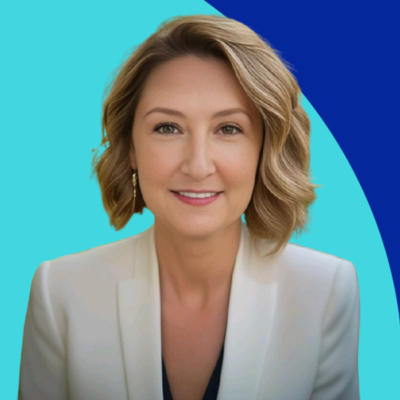
Vice President of Care Delivery Innovation at CAN Community Health.


.png)