Dr. Kyle Lavin is a palliative care psychiatrist with nearly 20 years of clinical experience and the co-founder and CMO of Cerula Care, a telehealth startup bringing behavioral health care to cancer patients in community oncology and underserved health systems. In this episode of Care Culture Talks, he speaks with Rivka Allouche about what it means to navigate language barriers in a specialty where the clinical encounter is almost entirely built on words.
Dr. Lavin makes the case for close human oversight for the next several years, a stepwise consent model that lets patients choose and exit AI interactions at any point, and a slower, more deliberate pace of adoption that brings clinicians along rather than creating friction with them.
On language access, Cerula Care currently serves Spanish-speaking patients through a bilingual care manager, while their community oncology clients in Maryland need coverage across more than 20 languages. Kyle sees AI-powered interpretation as the only realistic path to closing that gap at scale and frames it within a broader equity mission: their own data shows that BIPOC and Medicaid patients who reach Cerula Care present with higher depression and anxiety scores and respond to treatment at higher rates, which is exactly the population the model was built to reach.

Care Culture Talks, No Barrier
Care Culture Talks, No Barrier
Care Culture Talks, No Barrier
Care Culture Talks, No Barrier
Care Culture Talks, No Barrier
Care Culture Talks, No Barrier
Care Culture Talks, No Barrier
Care Culture Talks, No Barrier
Care Culture Talks, No Barrier
Care Culture Talks, No Barrier
03:25 Understanding Palliative Care
10:47 Language Barriers in Healthcare
14:28 The Role of AI in Healthcare
18:15 Balancing Technology and Human Oversight
21:39 Final Thoughts and Future Aspirations
No Barrier provides 295+ language access options, going deep on the dialects that matter clinically. Spanish covers five variants: US Spanish, Mexican, Cuban, Puerto Rican and Dominican. Arabic covers six regional variants. The full directory spans the top 40 LEP languages in the US including rare languages like Burmese, Nepali and Swahili. For health systems serving linguistically complex patient populations we recommend mapping these languages per site and per department. No Barrier will support bridging the gaps. See the language list and request the full directory.
Language access breaks down when a health system has one vendor for telehealth interpreting, another for phone and a third for in-person, each with different quality standards and audit trails. No Barrier is one vendor across every modality: telehealth, face to face, video and phone interpreting. The same compliant, auditable medical interpreting standard applies to every patient encounter regardless of how or where care is delivered. For CMIOs and compliance officers building a language access program that holds up across sites, shifts and care settings, that consistency is the operational foundation everything else depends on. No Barrier was selected for the 2026 NACHC/ScaleHealth Accelerator Cohort because it understands what that infrastructure requirement looks like at scale.
Language barriers create friction at every level of a health system: appointment delays, staff burnout, patient satisfaction gaps and compliance exposure around care equity. No Barrier's implementation team understands that friction because they have mapped it across hundreds of organizations. The operational results are measurable. Cost reduction of up to 50% depending on the organization. Patient volume up 30% for one provider that reports at Pacific Eye Associates after implementation. And a qualitative shift in staff and patient relationships that Community Clinic NWA described as regaining the connectivity they had lost with traditional interpreting tools. Implementing No Barrier is not just a cost decision. It is a decision to let operations flow at every touch point of care. Reach out to map where No Barrier can improve your flow and cost structure of interpreting.
Rivka Allouche (00:08)
I'm excited about today's conversation, Dr. Kyle Lavin. You wear two hats. You are still on the front lines treating patients and you are the CEO of Cerula Care, a startup bringing behavioral health care to people living with cancer. Clinician and founder at the same time is rare and exactly the kind of voice the industry needs right now. So help the audience get to know you. Could you introduce yourself as a psychiatrist and a co-founder?
Kyle N Lavin (00:35)
I'm very excited to be here. Again, Kyle Lavin, palliative care psychiatrist, the co-founder and the Chief Medical Officer of Cerula Care. I've been practicing as a clinician for almost 20 years now and founded Cerula Care four years ago to try and improve access to behavioral health for patients living with cancer. I'm happy to share more of my story, but certainly being a psychiatrist and a palliative care doctor, the way that words are our main tool and the data that we collect to both diagnose and make a treatment plan, the way that we access those words and the way that we're able to get it to patients who don't speak English as their primary language is something that's, I've lived personally and I know is extremely important, so I'm excited to talk about what that looks like.
Rivka Allouche (01:21)
So for us to understand what patient population do you primarily serve?
Kyle N Lavin (01:25)
Palliative care is a specialty, which is really interesting that you can go into in medicine. It's a one-year fellowship. You can go into it from 11 different backgrounds and specialties. Most people in palliative care train in family medicine or in internal medicine. But I'm in a small subset of the population where I've trained in psychiatry. And so I define myself as a palliative care clinician. But I view all of my patients through the lens of a psychiatrist. And palliative care is defined as anyone who has a life-limiting illness and we focus on three basic areas. So we focus on pain and symptom management, making sure that patient's quality of life is as good as possible no matter what's going on. The second thing we focus on is goals of care and advanced care planning or this communication bucket where when patients have a life-limiting illness and a prognosis of only months to years, it's our job to understand who they are, what's most important to them, make sure that they're hearing what's going on with their medical diagnosis and that they're getting all the information from the medical system. And I actually sort of define myself as an interpreter for them, for the medical system, because it can feel so overwhelming to them and it's our job to help them have as much control as possible as they get more sick so that they can navigate when they want to continue to pursue aggressive medical treatments and what that would look like versus considering focusing more on comfort and end of life. And then the third bucket is focusing on support, just recognizing that when patients do have this life-limiting illness, it's totally earth-shattering and overwhelming and it's something that people only go through once and we recognize that it's incredibly difficult and so it's our job to help support them through that. So to come back around and answer the question, I see patients with a life-limiting illness, oftentimes cancer, but any diagnosis lumbar failure, lung failure, heart failure, all those populations.
Rivka Allouche (03:25)
And both adults and children?
Kyle N Lavin (03:28)
So only adults, yeah. I'm trained just to see adults. I do see a lot of late adolescent young adults, but no pediatrics.
Rivka Allouche (03:36)
In this, do you have what we call LEP patients and what the language are they speaking primarily?
Kyle N Lavin (03:42)
Yeah, very much so. I mean, the majority of our patients speak English, but there are lots of patients. I recently had a patient who spoke Russian, lots of Spanish speaking patients. There's tons of patients who don't speak English as their first language. And so that's what I want to talk to, right? The work that I do is complicated when everyone has the tools of resources, language, financial support, the healthcare literacy. So even when everyone has all of those for the social determinants of health accessible, it's still hard to navigate. So when people don't have access to that, it makes it incredibly hard.
Rivka Allouche (04:18)
So like right now, what are the current tools that you are using in your practice to make the bridge when there are language barrier?
Kyle N Lavin (04:25)
I work in two settings. I work in the inpatient setting in the hospital where patients are hospitalized and then we get consulted to help them from a palliative care perspective and we use in-person interpreters there and so that works well. It's great to have the interpreter when they're available. There's a little bit of a wait time but it's nice to have everyone together in the same room. In the outpatient setting we do have in-person interpreters available as well but we also have the interpreters via the iPad, sort of a camera that rolls into the room, and then you can select which language you want and then be able to interpret that way. That's nice because there's less of a wait, there's more languages that are available, but I do think that it is challenging. Again, we can talk through this, but one of the things that I appreciated about what No Barriers is doing is that live translation where the wording comes up right on the screen using an interpreter, we're trained to use shorter sentences to take pauses and the natural flow of the conversation can be much more challenging when you're using that live interpreter where you have to pause and wait and stop versus the real-time transcription that shows up on the screen where again assuming that they can read what's going on it makes it a much more natural conversation.
Rivka Allouche (05:42)
What you say is interesting because it's not the first time that I hear that it's really convenient to see the wording and sometimes also images of like medical terminologies. When we built the product, it was not the primary focus, but then people keep talking to us and say it's actually very helpful. For people who are, hearing impaired and like they can visually see the words and the images. So it's amazing to hear.
We'll keep pushing this feature.
Kyle N Lavin (06:09)
Yeah, it's great. I love it.
Rivka Allouche (06:10)
So in terms of AI in healthcare, are you using AI in general in your day-to-day?
Kyle N Lavin (06:17)
I mean, I think you have to, right? In this day and age, if you're doing a digital health company, then AI is sort of table stakes in terms of using it to be more efficient to access, know, the way that we're using it, we're using it in two different buckets, sort of thinking about our clinical efficiencies and ways to transcribe and ways to ingest our information that we're gathering on our patients and then be able to put it into a database and tailor the care plans that we're delivering so that what we call our behavioral health care managers, who are the ones that are frontline seeing the patients, are able to be nudged to deliver the most evidence-based intervention for those patients. And then I think on the operational side, we're using it as well, thinking about how do we create AI agents to be able to organize the work that we're doing and to help with our billing. So, yes, we're trying to use it, can always do better, but I think there's incredible ways that we can think about using it, both from clinical efficiency as well as operational efficiency.
Rivka Allouche (07:22)
And so how is it about adoption? with your, with your staff? Is it long training and you need to convince or it's kind of natural?
Kyle N Lavin (07:30)
I think it's pretty natural. The cohort of clinicians that we're hiring tend to be on the younger side, you know, in the late 20s, early 30s. And I think that they've grown up in a world where technology is normal for them. And so, I think change is hard for anyone. So there is a little bit of resistance to doing things differently, but because there is so much administrative burden in healthcare, and you think about, especially with the patient populations that we're seeing, patients with a diagnosis of cancer, and the emotional strain that goes along with that, the moral distress that we as clinicians experience when we're seeing patients with serious illness, it's so exhausting. So the more efficient we can be and take off that administration burden, the documentation burden, the better it is for the clinicians. And so I think that from our company internally, we're all aligned that it's really important to improve the experience of the clinicians to be able to incorporate AI. And I think that one of our concerns is that we do see a lot of older adults and so as the end user, patients who are on the receiving end of the care that we're delivering, how are they going to accept and receive AI? The AI that we're using does not significantly change the care that the patients are receiving if they don't have access to video calls or you know, we can do our visits by phone. And so we're keeping an eye on that, but I think that even the older adults that as we think about ways to incorporate technology in AI, they've actually been fairly receptive to that idea as well.
Rivka Allouche (08:58)
Wow. I read on the page of Cerula Care that it's mainly telehealth. How it is with language translation? Are you using inside the product also interpretation service? How does it work?
Kyle N Lavin (09:10)
We're a young startup. We don't have a great process for using interpreter services. The way that we're doing it now is that we've hired a Spanish speaking care manager and they're the one that speaks directly and so they don't need to use an interpreter. It's a huge. One of the reasons that I wanted to found and the reason we started Cerula Care is that there's a ton of evidence that this care works. The only places where it's happening are in the top academic medical centers where they've got well-established supportive care programs and the people that aren't receiving it are those that are in the community or in the tier two, tier three health systems and so access is a huge reason for why we started that and we're presenting an abstract at ASCO coming up at the end of this month where we're showing that the patients that we're seeing from the Medicaid and BIPOC population. There's a higher percentage that access our care than typically access behavioral health services and that when they come into our care that their depression and anxiety scores are higher than those of the non-BIPOC, non-Medicaid population and that their response to treatment is actually better. And so thinking about from an equity and access lens, that's really a top priority for us and the next step of that is that people who don't speak English as their first language wanting to be able to extend that. So it's not something we're currently able to do and hoping to increase that access in the next few months. Moving forward.
Rivka Allouche (10:34)
And in terms of proportion, are you aligned with the standard data? Mainly meeting patients who speak Spanish first and then Mandarin, Cantonese, or do you have other speaking patients with Navarro, Marshallese?
Kyle N Lavin (10:47)
I think one of our main clients is a large community oncology group up in Maryland and they have patients that speak all different languages. Spanish is the top one, but then there's Cantonese, other languages. I actually don't remember the list, but there's certainly 20 plus different languages that they'd like us to be able to serve. In our current state, we're only able to help support patients with Spanish. But I think that from there, the reason that we're reached out to No Barrier and that we're talking with them is that our client really feels like having access to those language lines would make a huge difference. And so we're thinking about creative ways to be able to serve that patient population.
Rivka Allouche (11:23)
Okay, and looking macro and I took this question from Eyal who is also a co-founder and he would be very happy to hear your vision about it. He was interested in knowing your future aspirations about technology in healthcare and if we see in maybe two or five years, what would be the ideal environment both from the frontline and from vendors like you and us in the industry?
Kyle N Lavin (11:50)
It's a big question thinking about the ideal states of incorporation of AI and technology. And again, I think there's huge opportunities. I'm a proponent of it.
What I worry about is that we do it in a way that is responsible, right? Because when we think about, you all know this better than I do, when we think about interpreter services, there's translating the language, but then there's also interpreting from a cultural sense and cultural standpoint. And so I think that it's important to make sure that we have clinicians and people like myself, not that I know everything, but I'm still practicing and that there's a large group of digital health
companies that are moving quickly and trying to adopt and incorporate this technology. I want to make sure that it's done in a responsible way, but I think that as long as we're being thoughtful and rigorous about the way that we're incorporating it, that the opportunities are almost limitless. And you know, I think that there's so much power to human connection. And so how do we keep, whether we call it human in the loop or whatever, like how do we keep that human connection? And I can envision a time in thinking about our company, right? We're in three to four years. Our care managers are the ones that are the initial people that are interacting with our patients. And can AI replicate that and actually have a, whether it's a bot or an agent that's doing that interaction or that analysis? You know, there's some interesting studies coming out in behavioral health that when we think about acceptability and feasibility that some patients, both for psychiatry and for palliative care, when these are sensitive topics that people feel vulnerable to discuss, that they're actually more comfortable talking to an AI agent because there's a little bit of that distance and you feel like you can share some of the things that may feel scary or you may feel ashamed of. So is there a world where, you know, AI, we're not even talking about interpretation, but we're talking about them being the actual primary interface and the primary agent that's discussing things with patients and then being able incorporate decision making into that to be able to scale care and then you have the physician sort of supervising it and making sure it happens correctly.
I'm not ready to fully commit. That's what I'm hoping will happen because I still worry a little bit about it. But I do think that there is a huge access gap in palliative care and psychiatry. And the more that we can extend that through evidence-based AI technology, interpreter services, the better it is for patients from a population health perspective.
Rivka Allouche (14:28)
Thank you very much for your answer and you went ahead with my next question, it was more focused about human oversight. You sometimes we read papers about compliance that we need human in the loop and we need to check every encounter. So what would be for you the role of human oversight, like the right balance between technology and the fact to verify what the AI or the technology is able to generate?
Kyle N Lavin (14:52)
I think that at least for the next few years that we need to be careful, right? I mean, it just, when you think about making the work that I do in thinking about diagnosing someone with a new mental health condition, whether it's a thought disorder or a new diagnosis of schizophrenia, that is, again, a life-changing experience. And it takes one time of doing that incorrectly to basically unravel a patient's life and their support. You think about if someone is making life or death decisions about do they want to continue to pursue cancer-directed therapy or do they want life support given this acute decompensation that they're experiencing. Again, like if that's not captured correctly and we make the wrong decision, that's incredibly disruptive and harmful to both patients and to families. And so I think that there really needs to be pretty close human oversight for the next few years. And then, once we have enough of an evidence base showing that there are no errors, that the benefits clearly outweigh the risks or the negative outcomes, then working to change culture. Physicians are notoriously risk averse and they don't like making changes. And so we really need to not try to push it too quickly before clinicians and physicians are ready to make the change because that then becomes more contentious as opposed to feeling like there's alignment between clinicians and the digital health vendor companies that are coming in. And I worry that if we try and move too quickly that that becomes a lot of friction that prevents progress as opposed to finding an aligned way to study to do it in a way that truly proves out the benefits of it so that we can continue to move forward as opposed to feeling like we're, you know, there were vendors coming in trying to change what clinicians want to do that we should be partners as opposed to evidence.
Rivka Allouche (16:49)
I agree. The more we talk, we understand that sometimes it's not really a matter of risk or a matter of diagnosis. Like I think AI can be used as an interpretation in oncology, for instance. But when the patient just wants or prefers to talk to a human, the escalation should happen. I don't think it's a question of risk and you can correct me if I'm wrong, but more a question of sensitivity or emotion or preference.
Kyle N Lavin (17:16)
I mean, think, again. I'm not 100 % expert here, but I think there's a little bit of risk. And so that's a separate conversation, but I totally agree that the other thing to focus on is the sensitivity and the preferences and the asking permission. And that I can envision a stepwise model where someone's asked initially like, are you comfortable and okay with using an AI agent? Would you prefer speaking directly to a human? You can choose to speak with a human at that point at any time during the AI interaction that if you get uncomfortable that it can then be redirected to a human interaction. But yeah, I totally agree with you that there's some stepwise pathway of creating expected algorithms for when it's appropriate to use AI versus direct communication with humans and then an option to opt out if patients are uncomfortable. It makes sense to me.
Rivka Allouche (18:04)
Do you have more practical stories maybe to share about patients adoption with technology in general, not only about AI interpretation, but like in technology, if they like or dislike?
Kyle N Lavin (18:19)
When I think about the work that we've done with Cerula Care here, again, one of the things, from a technology perspective, we're really trying to think about how do we engage patients asynchronously and what are we doing between visits? Being able to have basic technology access to a web-based app where they can get updates on their information, they can message with their clinicians real time that people are available more 24-7, I think, makes a huge difference.
I think from just my individual experience of practicing as a clinician here at UNC that, again, so much of it is in the dictation services and being able to do the live transcribing and being able to have our notes done ahead of time. And so that's more from the clinician side. I can't, in this moment, think of a particularly poignant patient story where technology was extremely well received but I think globally, that's the direction that we're moving in.
Rivka Allouche (19:20)
Great. And do you have any advice you'd like to share with other tech companies that would like to enter the healthcare system just to really understand what's going on the frontline?
Kyle N Lavin (19:30)
Yeah, I mean, I think that my advice, and I just posted something about this on LinkedIn recently, is that make sure that as a tech company, you aren't just focused on the technology and the bottom line and the efficiency, that you really have the patient experience in front and center, and that you're taking that into account, that you have clinicians who have practiced, who understand what it's to see these patients who are able to give feedback and build the product from the ground up so that it really looks like something that's going to be useful both to clinicians and to patients and that the post that I had the other day was more of a call to action for physicians.
We're in medicine, we're trained in academic medical centers, we're trained in traditional healthcare models, and it feels very scary and very overwhelming to think about getting into digital health, to think about incorporating technology, to think about being a part of startups, and that we need more physicians who are comfortable getting out of their comfort zone to lean into these companies who are trying to incorporate technology, and then we need the technology healthcare companies to be willing to be actively recruiting the physicians to be able to bring those skill sets in because not that all tech companies aren't thinking about the patient first, but I think in general, I worry that they're more focused on the technology and the efficiency and that the call to action for them is to be able to bring those clinicians in even if there is a little bit of friction in terms of what it looks like to train them, to bring them up to speed, to move a little bit slower.
Rivka Allouche (21:31)
Very clear, very humble, also very human. So thank you very much. Do you have any other topics you would like to cover with us?
Kyle N Lavin (21:40)
I'm always enjoying talking. I think that my goal in having these conversations is to raise awareness and I think that it's incredibly important to think about how we can use these services, these technologies, which can be scary and can be dangerous, but to really truly improve access to care. There are huge opportunities. We need to do it responsibly.
Thanks for your time and appreciate what No Barrier is doing and just excited to be a part of these conversations and be on the front edge of trying to move these services forward.
Rivka Allouche (22:14)
Amazing. Thank you very much. Thank you very much for being with us today. Thanks also for your time, all your insights and your perspective really both from the frontline and from the founder sit, it's like it makes it very different. And I think like a lot of people would like to hear what you have to say. And so we'll be very happy to have you again, maybe in a couple of months to see how you progressed and how things evolved.
Kyle N Lavin (22:36)
Thank you very much. Nice to see you. Thanks for your time. Bye.
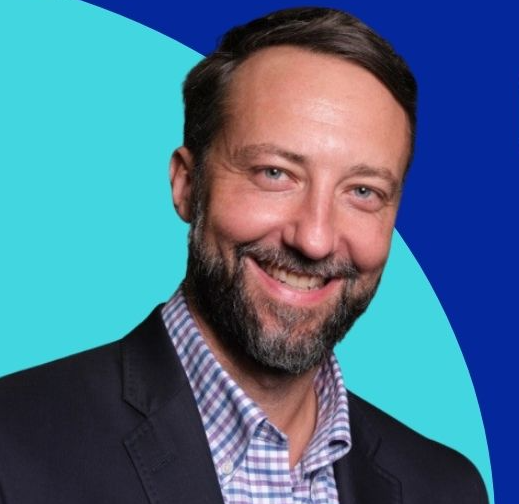
A palliative care psychiatrist and Cerula Care founder on what responsible technology integration looks like from the frontline, why oncology and palliative care set the highest bar and what health systems cannot afford to get wrong.


.jpg)