In this conversation, Dr. Chery Stevenson reflects on his path into healthcare and shares why culturally competent care is essential for patient trust and outcomes. He explores the experience of Haitian Creole-speaking patients. The cultural nuances that shape communication and the impact of language barriers on understanding and follow-through. Dr. Chery highlights practical strategies for providers, including effective use of interpreters, assessment of patient comprehension and continuous learning from the communities they serve. The discussion also looks at leadership in healthcare with an emphasis on empathy and support, along with the growing role of AI in improving efficiency and patient satisfaction.

Care Culture Talks, No Barrier
Care Culture Talks, No Barrier
Care Culture Talks, No Barrier
Care Culture Talks, No Barrier
Care Culture Talks, No Barrier
Care Culture Talks, No Barrier
Chapters
02:45 Dr. Chery's Journey in Healthcare
04:58 Cultural Challenges in Healthcare for Haitian Patients
07:16 Cultural Nuances in Patient Interactions
09:40 Addressing Sensitive Topics: Mental and Sexual Health
11:43 Effective Communication with Interpreters
13:41 Ensuring Patient Understanding and Care Plans
16:25 Management Philosophy in Healthcare
18:51 The Role of AI in Healthcare
23:36 Conclusion and Key Takeaways
Eyal Heldenberg (00:03.843)
Hi everyone and welcome to Care Culture Talks. My name is Eyal Heldenberg. I'm the CEO of No Barrier, an AI medical interpreter for healthcare providers. And I'm very honored to have with me Dr. Cherry. So welcome.
Dr. Chery (00:21.006)
Thank you Eyal for having me on Care Culture Talk. It's a pleasure to join you today.
Eyal Heldenberg (00:27.116)
Perfect. So a kind of disclaimer, I met Dr. in a recent conference and kind of was blown away from his philosophy and his experience in language access. So really looking forward to to kind of learn from you. So maybe, Dr. Cherry, we're going to start just from the beginning. Like, Could you describe your journey in general and in healthcare?
Dr. Chery (00:50.562)
Yeah, most definitely. So I was born in Haiti. So I grew up there until the age of 13, then migrated to the US. So going up there, I saw a lot of challenges for the population living there to access care. So very early on, I think first coming out saying my first few words,
told my parents I wanted to be a doctor because I wanted to create a difference for my community. Because all doctors was typically a herbal specialist. You go to him and usually during the summer if you spend it with your grandparents. So it kind of grew up from there. When I moved to the US, there were a lot more opportunities.
Definitely and when I enrolled in high school, I enrolled in a medical magnet program, but there are definitely challenges there Because as an immigrant to this country not speaking the language and trying to learn the language so you have accent that other kids will make fun of. Not being able to understand everything. Not only are you trying to learn a new language? But you also trying to pass your classes because you have goals
And also trying to assimilate to a new culture. Right? And there, because I, of the area that I grew up in, we had a lot of people similar to me who immigrated from Haiti. So it kept me close to my culture. And on the opposite end, because I was speaking mostly Creole during lunchtime, I would say it somewhat delayed
the process of me learning the language right because I wasn't practicing as much but I was I was always focused to To do to do medicine so graduated high school then went on to college again a culture shock because I would have to repeat myself multiple times or try to say things in different ways for my roommate to understand me because of my accent.
Dr. Chery (03:14.574)
Right something that In English? correct something that a lot of people were not born in this country experience So that's kind of you know, somewhat of you know, how I got my start into medicine and obviously from from their transition into into medicine But along the line I you know, there was a lot that I learned and a lot of different step that
Eyal Heldenberg (03:15.795)
In English. Yeah, yeah.
Dr. Chery (03:44.918)
allow me to understand the challenges that people similar to me, not just people coming from Haiti, but from other countries and culture face. And my experience prior as a teacher, before medical school also gave me that opportunity to interact with many people or students from different cultures and different backgrounds experiencing something similar to what I had experienced when I had just migrated to the country
and being able to connect and learn and understand that some of these skills and lesson that I learned, I continue to use today with my patients.
Eyal Heldenberg (04:23.767)
Yeah, I think this is a great example. Like the personal experience really impacts your adult life and the way you approach your patients, your colleagues. So I want to start with kind of a high level, you know, there is a big population of, you know, Haitian Creoles speaking in United States in different cities coming from those communities. Could you describe what are uniquely, what is the uniquely
you know, d difference difficulties, for those kind of, people that face, you know, the health system and coming to doctors, ER and others.
Dr. Chery (05:05.442)
Yeah, yeah, most definitely. That's a great question. And I think, you know, for me, it goes back to understanding where these people are coming from. So for Haiti in general, if we take a step back and go back to the country itself, for those who had the opportunity to attend school, our school are taught in French, right, at all levels. So from kindergarten,
professional school, medical school, law school, everything is in French and Creole is sometimes offered by some school, some of the private school as a foreign language. When you have majority of the population are fluent in Haitian Creole, so they speak it, right? So you take that same majority population and you bring them in, right? To go see a doctor. Now that doctor
Eyal Heldenberg (05:43.104)
Hmm.
Dr. Chery (06:02.434)
did not learn medicine in Haitian Creole. They learned it in French. So they have to find a way to communicate that. And a lot of times, it's just communicated in French, to be honest, because with Haitians seeing the doctors as in the know-it-all, the next to God or right after God, they tend to just say yes to everything.
You think that they know, but they don't. So a lot of times that create frustration for the physician or the provider because you not seeing any improvement in the plan that you had discussed with the patient, right? And for that patient who is not used to seeing the doctor as often, didn't have access, they are used to just taking their tea and so on. So how do you now educate that patient?
to say, hey, you don't necessarily have to rely on the tea only, but we have medicine. Like we are in 2025, there are research and things like that and bridge those gaps. So there's a lot of disconnect that happen when it comes to providing care for that community. And it is beyond just having an interpreter or a language line to communicate or to...
translate what the physician is saying to the patient.
Eyal Heldenberg (07:32.381)
I see. So you mentioned two things. You mentioned one is kind of a culture that's kind of mostly say yes, even without kind of understanding or kind of, or kind of try to show respect. So this is one thing. And you also mentioned there is a French and I think there is overlap in a way, but not kind of full overlap between those languages. So one you learn at school, the other one you talk, you you have your conversations and those
Overlap can help but it's not like the same language, right?
Dr. Chery (08:05.582)
Correct, correct. It's not like the same language and those overlap right when you look at the population Currently in Haiti and I don't have the exact numbers but majority of The the population cannot speak French fluently, right? They may hear if somebody's speaking French is talking they may hear a word here and there that may be similar But they won't understand a full conversation or the context even of what's going on
So the minority that get to school, graduate high school, essentially the equivalent of it, is very minimum. And those are the people that you are saying that they speak or they have a mastery of the French language.
What about the rest of the people who are the majority, right? They can't read French. They can't understand French. And I'll go even further is even the Haitian Creole language because it's mostly spoken. A lot of them can't even read information in Haitian Creole.
Eyal Heldenberg (09:21.396)
Got you. All right, which kind of a segue to kind of the we started to talk about cultural, you know, properties and saying yes, Any other cultural nuances that you think providers should be aware when they handle, you know, this population.
Dr. Chery (09:42.764)
Yeah, most definitely. one is this population, well, I provide care in the South Florida area. So, and even in the other region where you have a large Haitian population, you will notice a difference when they come in with their children who were born in the US, right? That you may see, you may even notice some.
cultural differences. One of them that comes to mind is in Haiti you are taught when you are speaking to somebody in a higher position or somebody who is your elder to look down, not look at them in the eyes because it's viewed as a sign of disrespect, right? In the US we know the culture is the sign of respect is I'm talking to you, right? Look me in the eyes, right? So sometimes it's not a matter of
the patient feeling inferior, but it's a matter of this is how they show respect. The second thing is, patients look at doctors very highly. right? This is one of the things that you will hear very often. So they usually dress the best and come very nice to see the doctor. And one of the things that happen is when they go to the doctor and dress the best in order for them to feel cared for, the...
Physician or provider has to physically touch them examine them. right? So don't go, you know, Even if it's just listening to their heart and lungs they that in itself Psychologically could make them feel better walking out of your office Because that's what they expect they put on their Sunday best to essentially present to a higher power Which is how they kind of look at it
So definitely those nuances, and there's a lot of nuances with the diet as well when you are talking about lifestyle modification and being able to address those and the nuances in the Haitian diet are some of the cultural differences that I think providers could benefit from knowing to provide better care for that patient population.
Eyal Heldenberg (12:01.329)
Yeah, yeah, totally makes sense. Which kind of brings us to another topic. Different societies, traditional societies have different perspectives or different specialties, mental health, sexual health, some stigma. I wonder if there is anything around those kind of more sensitive specialties that providers should be aware of, any belief.
coming from your home.
Dr. Chery (12:34.242)
Yeah, yeah. So typically in the Haitian community, when you talk about sex in itself, it's kind of like, we don't talk about that, right? When you talk about mental health, it's viewed as this is, I'm not crazy, right? That's usually the response. And how do you broach that topic in a culturally sensitive manner for this patient population?
And a lot of it, the Haitian population have been through a lot and they've learned to kind of move through chaos and be resilient through it all and don't think that they need help even when they have physical symptoms. So some of these things, while it may be easier for some other communities to just accept,
But I think to keep in mind those cultural differences, and it's not just the Haitian culture, mental health in itself, even in the US with some communities, can be a challenging topic to broach with patient. So it's keeping in mind and asking the patient. Sometimes it is, we don't know. And I've had encounters where I don't know, I think a patient needs to be seen by behavioral health. can sense that there is some cultural.
or some resistance and don't know where it's coming from. Sometimes it's taking a moment and asking the patient to understand, and it may not be done in one visit to eventually get over that hump, but it's being patient and your patients are willing to teach you, right? As physicians or providers, healthcare workers, we are lifelong learners and one of our biggest teachers are the patients. They can teach you a lot.
So not just about medicine, but about the cultural differences and ways of viewing things and how do we understand where a patient is coming from and meet them where they are to be able to deliver that high quality care.
Eyal Heldenberg (14:44.508)
Yeah, yeah. I wonder, so basically you can, you know, take care of patients that speak Haitian Creole because you speak. I wonder if you, know, what you, it's kind of relates to what you said. You kind of treat other patients from other cultures, backgrounds, language, dialects. So I wonder first from your frontline, what do do? Like you call an interpreter, you call that bilingual staff and what you bring to the table.
because of your background when you call the interpreter? and do you kind of have your nuances of this, the patient, the interpreter and you as a provider, what's Get me into the room of the encounter?
Dr. Chery (15:35.854)
So typically, I would say We're very fortunate in the healthcare field that as the providers, we're not the first line of contact, right? We'll be notified ahead of time which language the patient speak. And When I walk in the room, one of the things that I learned is even in culture that...
Embrace right like for example some Latin communities. They like to hug and kiss on the cheek and so on even with a physician One of the way that universal way to show respect or to greet people is to is to bow right a head bow or something and that's something that I universally use because it's better to start off that way than to Extend my hand and try to shake your hand and you like in my culture
a male and a female are not supposed to touch, right? So that's one of the things that I typically do. And I would go ahead and on my cell phone call the language line when I walk in the room. And from there, can, as soon as I walk in the room, I can initiate the conversation and have the interpreter start translating, right? So all of the information that the interpreter needs
Eyal Heldenberg (16:29.05)
We don't do it.
Right.
Dr. Chery (16:57.83)
Already given outside and I'm walking in the room as if the interpreter was with me to be able to start the visit and from there I Because all interpreters are not equal so I definitely explain to the interpreter to translate exactly how the interaction is going to be and to let me know if there is
any other ways that they would prefer it because I want to make sure that it's respectful. I'm delivering culturally competent care. So when I'm talking, I'm not talking to the phone. I'm going to be talking to you. Let me know if me looking at you directly is a sign of disrespect and so on. I'm willing to accommodate. I'm willing to learn however that may be. Then I get to the visit.
and make sure that I keep in mind and incorporate the patient feedback into that aspect. majority of the time, don't think I've probably once that I've had a patient say that they didn't feel comfortable with me looking into their eyes and they wanted to focus on the phone and what the interpreter was saying. But majority of the time is very comfortable because they feel like I'm talking to them.
and not necessarily ignoring them and somebody else is conducting the visit or doing something that they can't even see.
Eyal Heldenberg (18:30.211)
Yeah, This is a good tip. Basically you say that even that medical interpreters are trained to deliver the message as it should be. You say, I'm going to say to the interpreter that, just focus on conveying the message, just making sure. Because if any interpreter would have kind of different flexibility there, he now knows that the provider here really kind of aware
of this communication channel and is aware of the quality that the provider on the other line is expecting, right? So this is kind of a good tip for anyway.
Dr. Chery (19:16.044)
Yeah, yeah, most definitely. And I think that is something that I've learned early on and, you know, being someone who's multilingual and have picked up Spanish a little bit. I'm not fluent, but I can definitely understand when I'm using a Spanish interpreter some of the things that may not go exactly as I would have wanted to deliver the message and witness some misinterpretation.
from the patient to me or vice versa, I've definitely made it a habit to make sure that I'm being consistent across the line to minimize the misinterpretation and some of the mishap that could happen during the visit.
Eyal Heldenberg (20:04.654)
What do do when you spot a miscommunication there with the interpreter?
Dr. Chery (20:12.664)
So if it's a language that I'm familiar with, for example, Spanish is the most common that I would use because I don't use for Haitian Creole, I would definitely say, my understanding as to what the patient is saying is this. I just want to make sure, can you have the patient restate? And I would like for you to retranslate. And if it's something that is consistent throughout the visit, I would ask for another interpreter at this point.
the point of the visit to ensure that because what the the focus is the patient right so I want the patient to walk out understanding and I think it comes from me being a teacher whenever I teach a lesson I want my students to feel comfortable in knowing that they understand the material and without that feedback or if I'm not getting the full information I can't really deliver the care that the patient needs
Eyal Heldenberg (21:12.555)
Right, We hear from many providers that have some, I would say, knowledge in Spanish that they know the quality of the communication. We don't have any other method if you don't know. If you have Cantonese encounters, you don't have a clear way to know, Or maybe you have.
Dr. Chery (21:30.36)
Mm-hmm.
Dr. Chery (21:39.532)
Yeah, one of the things that I do with, and sometimes you will catch it at the end of the visit if you do this as a provider, right? I do the teach back method with my patients, whether or not I'm using an interpreter. And what that is is at the end of the visit, I would ask the patient, you know, what is the game plan, right? What is it that we discuss that...
is in your care plan that you have to do, when is your next follow-up, what do you have to do, and so on, right? And if within that there is some misunderstanding, sometimes that's related to the interpretation and it's not necessarily the patient lack of understanding, right? And usually you can tell because of health literacy for the patient in their own language, right? If the patient, for example, was an engineer,
and achieve a high level of education in the language that is being interpreted, right, it's very hard for them to, if it's being done correctly, it's very hard for them to not fully understand a care plan unless there's some medical issues and other nuances going on there. But sometimes you're able to pick it up in that.
Eyal Heldenberg (22:56.565)
Right. So basically the teach back is a way for you as a provider to confirm the understanding through the language barrier. you will get back the understanding of the patient through the interpreter and say, okay, so this patient got it. He knows what's the care plan. He knows that the course of actions and you have your assurance that it's kind of a clear and vice versa. If you don't get it, you say, all right, so maybe we need to
do it again or explain again and just maybe guide the interpreter. Hey, we need kind of more of a guidance there, something like that.
Dr. Chery (23:33.358)
Yeah, yeah, I do it with my English speaking patient check understanding because patient satisfaction come from them seeing result. Right. So if I discuss a plan with you and you don't have an understanding of that plan and I'm seeing you in a month and Let's say the plan was for you to take your medication and in a month I was expecting for you to lose five pounds and you can come back and you gain five pounds, right? And when I'm talking to you, you're like, oh, I didn't know you send the medication to the pharmacy
It's not, that's my fault because I didn't check the patient understanding of what they needed to do walking out of the visit, right?
Eyal Heldenberg (24:12.748)
Yeah, yeah, It makes sense. So even without language barrier, it's a good practice, right? Anyway, so got it, got it.
Dr. Chery (24:17.25)
Yes. Yes. So I always tell my patients I do, as soon as I walk in the room, I do an assessment. And when I'm about to leave, I do an assessment. And the assessment is I always ask my patient to confirm their name and date of birth. You'll be surprised how many patients start to show sign of dementia in that question. And that's something we should be doing, DIVO identifiers, even if you use it to the patient.
Eyal Heldenberg (24:37.515)
Wow.
Dr. Chery (24:46.648)
So that's number one. And number two, my last check in with the patient is to see, right, do they really understand? Because if you're not understanding, and if I can make sure, right, especially in the English language or Creole language that I know that I've gone over this and you're not getting it, then maybe it's time to get some family members and you need some help in managing your health condition. Those assessment help me essentially provide better care for the patient.
Eyal Heldenberg (25:13.726)
Right, this is a good point. The assessment could go different ways and bring different methods and the provider kind of should be leading this kind of assessment and next section. So this is a good point. You know, when I met you at the conference, I was very impressed by your management philosophy. Now in a management positions in Community Clinic and with your
background of this cultural and language barrier. I asked you, hey, could you kind of share more on the philosophy, how you support the providers when they face those kind of, even not cultural, just patience, but especially with different cultures and languages. I wonder if you could just get me a glimpse of that. Would love to share.
Dr. Chery (26:08.034)
Yeah, this is actually one of my favorite things to talk about. One, we have to take a step back and understand that providers are human. And as human, and I usually tell my providers during the interviewing process, as human beings, one of our common traits is that we all make mistakes. I haven't met a human being who have not made one mistake in their life. So we have to start there.
So when my providers come to me and are mentioning, there's a patient grievance, a patient complaint, and they're worried, I keep that in the back of my mind because they are human. We are caring for people. We have to be very careful and so on. And not to say that I don't hold them accountable, but when I'm listening, I'm listening with that perspective in mind that they are human. Would there be opportunities for improvement?
Of course, and I listen to understand, to comprehend. And as I'm listening, I'm also evaluating, was there something that the system had in place that resulted in this? Was there something that I could have done as a leader to help my provider? Or is my provider overworking and that's why this is happening, right? There are many different factors to look at.
And when you listen to comprehend and not respond, you get better results from your providers. There's a trust there, right? They know that, hey, this is someone who is invested in me, who care for me, right? As easy as this week, right? I have a provider that for the past month, I've noticed that he's been letting me know, hey, I'm
coming in late or hey, I have to leave early and so on. And sometimes they call me and say, hey, they complaining about the provider. And I'm noticing that's not usual. So I reached out to the provider. say, I've noticed this has been happening. Let me know if you need to take some time off because we can work this out. Not necessarily for him to open up to me and tell me what was going on because some providers
Dr. Chery (28:37.454)
don't feel comfortable sharing that personally, and I don't want them to feel obligated. And this provider opened up, there's so many things going on in this provider's life that is impacting even his ability to care for patient. And that was just from observation of a change in routine, a change in pattern. So we were able to provide the provider some time off. And I know that that provider, when he comes back,
And I'm speaking specifically from experience that if the organization needs somebody to step up to do something, giving him feedback, wanting him to see one or two more patients, that provider would do it knowing that the organization invested in him as a person and not necessarily seeing him as a number.
Eyal Heldenberg (29:25.3)
Yeah, This is super powerful. think maybe kind of the main, The core essence is comprehend now, react later, or maybe don't react, but just get the things in, analyze them and be there for the team. Just first start to listen. this is very, I think many of us don't do it, or don't do it occasionally.
Dr. Chery (29:51.47)
Mm-hmm.
Eyal Heldenberg (29:53.961)
like many times and especially with care teams and those stressful environments, right? This is human lives. It's not like the corporate, the regular corporate pressures. It's just a different layer of pressure. So it even gets more stronger to get those settings and kind of human touch. All right, so last question for today.
AI is coming and on different places, by the way, in healthcare, we see many initiatives from scribes to other. I wonder if you have any, and of course, language access and cultural aspects. wonder, like, how do you, as a manager in healthcare, how do you see this AI revolution, any things we should look for? What are the KPIs that we as a system need to look for?
and just a general kind of a vision there.
Dr. Chery (30:55.672)
Yeah, I think there's both excitement on one side and there's concern and worries by some in the healthcare industry when it comes to AI. The excitement is the ability to automate some work and do some of the work that used to be taken care of by human and not having to worry about, you know,
short staff and so on in the healthcare field. The concern is, and I was just discussing that at a conference that I was at, is some of the front line staff, as far as front desk and medical assistants and so on, are worried about AI replacing them. So for me, I think with any new technology, there's always those two.
worries and excitement and I think it's a great opportunity. I think it's exciting that AI is here And there's definitely going to be benefit to it. I think our patients will have access to AI and they'll come to to their doctors Having information and essentially I think they can come and say hey, this is my care plan What do you think of it? Do you want to sign off on it and so on? think that's the direction we're heading and beyond that
I think when you look at AI in different areas of medicine, trying to lighten some of the workload that EHR created for, whether that be for the physicians or the support staff in general, I think there is tremendous opportunity there that is very exciting, that will help to keep the patient at the center of care.
Deliver care in in a safer more impactful and faster way when you talk about for example prior authorization having AI to do that right that's quick as opposed to somebody that is responsible for doing it they may not get to it until tomorrow and so on and the workload pile on depends on how much you have and so on so there's definitely
Dr. Chery (33:21.942)
a lot of positive there that are exciting.
Eyal Heldenberg (33:26.255)
Amazing. All right, so Dr. Cherry, I really appreciate your participation in Care Culture Talks and sharing your experience, journey and tips for providers.
Dr. Chery (33:39.768)
Yeah, and then thank you so much, Eyal, for having me. It was a pleasure being on here.
Eyal Heldenberg (33:45.169)
Thank you.
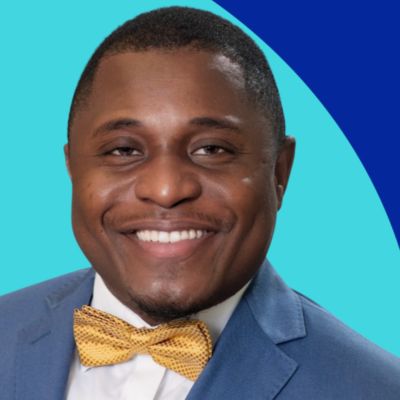
Physician and Haitian-American healthcare leader


%20(1).png)