In this new episode of the Care Culture Talks podcast, Dr. Aurelio Muzaurieta speaks with Dr. James Richardson about the critical role of language access in modern healthcare. The conversation explores how language is handled as a logistical challenge, focused on coordinating interpreters because of the complexity to connect at the point of care.
They discuss why using family members as interpreters can introduce clinical, ethical and emotional risks and why professional language support is essential for equitable and compliant care. The episode highlights how a multimedia approach allows patients to see images for medical terms, improving comprehension and confidence during care encounters.
The discussion also covers how AI-enabled language support is especially valuable for mobile medical units and resource-limited settings, where rapid and reliable communication is essential. As new U.S. regulations threaten coverage loss and drive more patients to emergency rooms, the need for scalable language solutions becomes even more urgent.
At the center of the conversation is the patient experience. Building trust means meeting patients in the language they are most comfortable with and ensuring they feel seen, understood and supported throughout their care journey.This episode is essential listening for healthcare leaders, clinicians and innovators interested in health equity, language access, patient-centered care and the future of AI in healthcare delivery.

Care Culture Talks, No Barrier
Care Culture Talks, No Barrier
Care Culture Talks, No Barrier
Care Culture Talks, No Barrier
Care Culture Talks, No Barrier
Care Culture Talks, No Barrier
00:00 Introduction to Language Interpretation Challenges in Healthcare
03:46 The Journey of Multilingual Patient Care
07:52 Current State of Language Services in Healthcare
10:59 The Role of Technology in Interpretation
15:23 Challenges in Emergency Care Communication
19:19 Improving Communication for Non-English Speaking Patients
22:45 The Future of Multilingual Healthcare Solutions
Aurelio Muzaurieta (00:07)
Welcome to the Care Culture Talks. I've been working with Eyal with No Barrier and we've been really trying to focus on the problem around language interpretation in a very diverse patient population and what are some of the challenges of different healthcare systems and healthcare providers that actually trying to care for patients who speak with lots of different languages. And so he graciously put me in contact with you, said that you all have been using the software, if that's correct?
James (00:41)
Actually, I saw a demo of it. I was attending the California Primary Care Association Conference recently, and they had a demo booth there. And I've seen systems over the years, but I was incredibly impressed with the No Barrier's product and was going through my years of being in healthcare and certainly have seen know, interpretation done well and to the benefit of the physicians and patients and seeing it done where it doesn't come together and the consequences of that. So I was, yeah, that's what I was intrigued by.
Aurelio Muzaurieta (01:16)
right.
Fantastic. Well, it's wonderful to take some time and hear your perspective. How many years have you been working in healthcare?
James (01:27)
I don't want say too many, but 30 plus years I've been on the hospitals. I worked at a children's hospital with the California Hospital Association. I've done a lot of work in physician relations for health plans. A lot of time on the Medi-Cal side with health plans and medical groups and whatnot. Currently working for our vascular surgery practice.
We have seven locations, mostly in central California and rural areas, lot of agricultural. We designed our clinic network so that we would, that come to see us are often coming every week for a matter of two or three months. We specialize in wound treatment, so frequent visits over two to three month period till we get them healed. So transport.
James (02:14)
is an issue. So that's why we tried to build a network that people could get to fairly easily. My other side hat that I wear is I'm the President of the California Medical Group Management Association, which is the professional association for medical practice managers. It's a nationwide group. I happen to be the President of California. So we have hundreds of practice managers all over the state that I interact with. I've been doing that for about 10 years and they have challenges that they share in meetings with me and open meetings about interpretation and the difficulties that they have with it. So that's my other perspective.
Aurelio Muzaurieta (02:55)
Very nice, thank you for that. It sounds like for many years in one of the most diverse states in the US, with not just Spanish being such a primary language, although that's probably about 80%, but with Chinese, Vietnamese, other different languages that are
James (03:12)
Punjabi, some, yeah. We have a school here that someone told me is 25 % Russian. That was a little surprising to me, I just read a health department report that about 50 % of the population speaks a second language at home, predominantly Spanish or Southeast Asian.
We're about to open a new office in Salinas, California near Monterey. And we expect, or we've been scouting over there and expect to have a very similar situation.
Aurelio Muzaurieta (03:46)
I can imagine. What are some of those issues that you and your fellow medical practice managers are discussing with respect to multilingual patients and trying to bridge that gap?
James (04:00)
Yeah, I think bridge is a good word. We tend in our practice to phrase it as a journey because people come and see us fairly often. But I think the healthcare has gotten complex. The continuum of care from where a patient seeking care to they actually get to a visit. And then the follow up I think of as a journey and the path has very complex obstacles. From the start to finish. And I think effective patient communication can be the light on the path. It's kind of the way I visualize it. But the pre-encounter is people are looking to see if care is accessible. They can get an appointment. Will they take my insurance? Does the staff speak that? How do I get transport? All the way leading up to you know, the visit itself, trying to coordinate an interpreter, an in-person interpreter with the physician or care, you know, clinician and the patient getting those three people in the same room at the same time can be problematic. It can be expensive. And then the alternatives, is obviously you don't want the families interpreting.
That carries its own set of issues. The expense again is an issue, but virtual is not ideal, but it's very, the new technology I think is much better now. Practice managers also see, we just had a session from a malpractice attorney that real communication with people, it builds that trust with the patient and
if they can understand you, they feel heard. They're more likely to have a good outcome, stay with their treatment and avoid a situation where they feel like, my situation got worse because they didn't understand what the doctor was asking of them or the staff and the medications, follow up appointments, treatments.
And that's where you get at risk where somebody their health gets worse and they say "Well, I'm gonna sue the doctor". The other issue that I think we're going to start to see a lot of the conferences I'm going to physicians are concerned and practice managers. There's a lot of violence against health care staff, physicians, and frontline workers. And when a lot of people are potentially going to lose coverage or have difficulty arranging appointments, I think that the communication is key to deescalating those situations and making people understand. Particularly if someone's coming in and saying, "Well, we can't see you because you lost your insurance" or some of those situations that are going to be because of recent actions are going to come up more often. Then the follow-up is the follow-up. Yeah, same type of trust. If that's built, the patients tend to stay in line with their treatment, have great outcomes if the communication is there.
Aurelio Muzaurieta (06:51)
That is, think, on top of mind for a lot of practitioners and folks who are trying to manage practices and build practices is providing good care and communication is so key for both patient outcomes and also patient satisfaction and being able to ensure that everybody is satisfied with the care that's being provided.
All of those can play their role right now, but it seems like as new technologies, particularly empowered by AI, are able to facilitate the process of interpretation that there might be a lot of improvement in these issues with communication. I wonder what your organizations and other organizations in California are doing to what is sort of the current state of affairs with when patients have language needs and how is that addressed right now?
I think that might be helpful to understand as we look forward to try to fill that gap.
James (07:52)
Yeah, I think our practice is 75 % Medi-Cal probably and a little bit of Medicare, a little bit of commercial, but on the Medi-Cal side, the plans are generally very good about providing interpreting services. It's just a logistical thing of trying to coordinate, even over the phone and make that happen.
I think, the new technology is definitely going to help. COVID may have been a mixed blessing in that people got used to virtual encounters and whatnot. But I think, the system that I saw, you know, where the practitioners sitting right there talking with you and the, uh, software, is explaining things.
Particularly being able to pull up difficult words in medical terminology and show diagrams. Eyal always showing me where you can tap and that'll show pictures like in our case of a wound on the leg and some things like that. So I'm very positive because I think it's a way. Yeah. And I think too that, you know, I just sat through this malpractice thing that if you can really.
Aurelio Muzaurieta (08:55)
Through multimedia approach.
James (09:03)
reach a point of understanding where the patient understands where they're at and what the future treatment is, why it's important, and that they feel comfortable understanding that that's gonna be a tremendous benefit. Also, on the other side of the, there's the clinical encounter, but also with the staff when you're trying to arrange the logistics of their visit, the insurance, the this.
I could see that being a tool that would really make people feel welcome in a practice, that we get people that don't sometimes seek care because they think, I welcome in this practice? Are they going to speak my language? Are they accept my insurance? And so we try to find ways to set ourselves apart as a practice because I think then word gets around and communities that this doctor has this tool or speaks a particular language, they start to share that in a community. We have a pediatrician here that learned sign language and all the people who were hard hearing impaired with kids, he was a pediatrician, started telling each other and all of sudden he's got this whole portion of his practice that's the using sign language, but I think that happens with verbal language as well.
Aurelio Muzaurieta (10:21)
That's fascinating.
There's quite a bit of talk now since you had mentioned the medical malpractice of what it might look like with this technology in terms of when there are miscommunications, whom does that liability fall, sort of ensuring the validity of translations. From an internal perspective, it's been pretty amazing. I think our data has shown that the translations, particularly in more popular languages, are outperforming a lot of
James (10:40)
Yeah.
Aurelio Muzaurieta (10:59)
professional interpreting services and when we've compared them, that basically the technology and the AI is actually doing, better than in-person interpreters because there's just so much more data. But we don't really have the protection in that way in terms of protecting that. If a computer system fails it ultimately is on the practitioner and the practice so I think I for one am very optimistic about where we're going to be able to move forward but we do have some things to get through
And I think that that's probably within all of technologies that are entering into healthcare whether it's a clinical support tool that is using AI, ultimately a practitioner, the person using the device is kind of taking on responsibility for the product. And they'll just continue to need to be a lot of validation studies, both internally and externally to make sure all the languages are churning out good translations, that patients are satisfied with the services, their understanding, and then those outcomes. So there's a whole frontier kind of to be used here. And I think with No Barrier, what we're trying to do is just understand really what people are doing on the floor, both at the clinical level and also at the managerial level, because what a what a community practice or a health system that is trying to see a lot of patients in a particular community and make sure that they can keep the lights on has to be a product that we're also, that's affordable and useful and adding value in a way.
James (12:42)
Yeah, I could see certainly the value of it in remote areas. We work with a lot of rural health clinics that send patients to us and they have mobile units, street medicine units that travel around. That's another application where if you have this tool on a tablet, that can be a tremendous help.
Again, for the staff in getting the patient to feel comfortable seeking care and realize, "Hey, you you're important to us. We're taking this step to make sure I'm going to be right here with you." I think that's a key element or advantage of this, that the physician is right there in the room talking with them and the person may feel more valued.
They're not just talking to an automatic system or someone on the telephone that they can't see. If they leave the appointment feeling like "I was heard and I understand what the physician was saying", that's a positive thing. I can see a lot of application for it. Again, People talk lot about, saying, well, a virtual visit or technology isn't as good as in person. But if the in-person visit isn't an option where you're using, certainly the second best option is better than no visit at all or no successful conversation in a patient appointment.
Aurelio Muzaurieta (14:14)
Right. Are there any kind of questions that I can answer for you in terms of No Barrier or practice or anything like that?
James (14:22)
To me it's in a practice setting. I talk with a lot of practice managers all the time, and I think they're always looking for tools that, if these situations arise, they may have found a way to handle it, but that they could really use to have this tool available to them when they need it, both on the administrative side, arranging patient care as well as providing it. And so I think there's a lot of interest in that. I'd be curious to hear your experience, you're in the ER and how does the communication, because I think we employ actually a trauma surgeon that does a lot of emergency surgery and he says, I don't have to talk to anyone because they're not awake when I get in the room. But still, how does that work in the ER when you have the patient and family members coming in and you have very little time to react language-wise?
Aurelio Muzaurieta (15:24)
It's certainly a challenge and I think that you made a very good point where there is an access barrier, particularly in under-resourced or remote rural areas where you don't have an in-person interpreter available or the practices wouldn't be able to afford that. I think that there are large tertiary, quaternary academic centers that are very blessed with many resources.
They'll have a 24-hour Spanish interpreter, for example, or maybe even multiple on site that can show up for difficult conversations, very high-intensity, time-sensitive sort of conversations that can be available for that. That's not available all over the State or, and certainly not all over the country.
The current technology, which is limited, particularly for our more hearing impaired or just elderly population, which is particularly represented in non-English speaking patients, a lot of grandparents who immigrated with their children might speak the language, but not the parents or grandparents.
James (16:20)
Yeah. Got it.
Aurelio Muzaurieta (16:27)
Right? Not always, but that's very true. They can't hear the iPad on the stand or see anybody on the stand that is doing the interpreting and there's often connection issues and things like that make the technology high probability for failure. The phones are particularly problematic, I believe, with interpreting only because there is a lot of difficulty with hearing back and forth. The phone will sometimes drop the call when you're not expecting it. And so I would agree it's pretty difficult. And a workflow of a particular medical place is very important. With the emergency department, there are multiple points of contact where a patient's gonna be interacting with the staff. The registration, the triage nurse, the nursing staff who are gonna get their IV financial services, then the physician and then the technicians that are doing EKGs and x-ray techs. There's so many people that are kind of coming in contact with a patient when they're having an emergency visit.
Two things that I think are important are, like you had mentioned, one of your pediatricians who is credentialed in American Sign Language and is able to sort of care for that population. I think more credentialing around clinicians who speak a particular language or who would like to gain, maybe speak a language at the conversational level but want to gain that medical terminology. Or there plenty of native speakers in a language who are actually not providing medical care in that way. And there's actually quite a difference and that's a very important reason why medical interpreters exist as a whole credentialing process, a schooling process, similar to anyone else. So I respect that profession. I think it's important now how do we make that more accessible to community practice, to rural practice, remote practice, because that I think is where the health equity issue lies and where the issue around being able to provide at the very least a comparable or equal level of playing field for non-English speaking patients is key. I was lucky in that I trained in a lot of the common languages before medicine. I have the credentialing and several languages to be able to do this. I'm very blessed in that just because I feel like a lot of my mission around emergency medicine and what keeps me going every day is being able to care for patients who don't speak English as a first language and in very high acuity settings where they're coming in for a trauma or a medical resuscitation in a very short amount of time, get key historical information, physical exam findings and move forward with their care in a way that with an iPad or a phone is very difficult and even with an in-person interpreter.
It can be very cumbersome when there are a lot of people in the room. So it's a unique practice setting, I admit, but I think that the challenges are very similar. And in fact, I think in the outpatient setting, there might be even more of an importance on communication, interaction, certainly a patient satisfaction aspect of things, and follow-up.
The follow-up, is the other piece where I really hope that we can make some progress. There's always an after-visit summary or a discharge summary or something that is provided to the patient, printed or through their device that summarizes more or less what the visit was about. I've noticed that a lot of folks, there's varying practice around putting that in the patient's primary language. The way that we've done it. Let's say I don't speak Punjabi, but if I write out or translate my instructions into Punjabi written, there's no way for me to validate that. And so what we typically do is we write it in English or there are some predetermined documents in different languages, mostly available in Spanish, that are about particular disease states and follow up, but they're written. And then what we'll do when we have the resources is the...
we'll go through with the interpreter those discharge instructions in English, but then make sure they're verbally communicated. But it's a very time consuming task and it's certainly not, I would say from an operational perspective, the best use of resources. So, I mean, that can take up to 20 minutes to go through all of that stuff and that's a whole patient encounter.
James (20:48)
Yeah.
Aurelio Muzaurieta (21:02)
The way that I see things getting moving a little bit better are making the interpreting aspect of things seamless as if there's no one else in the room and it's just the conversation happening as it were in the native language.
James (21:23)
Yeah, I think obviously you would know that supporting primary care and prevention keeps people out of the ER. And hopefully we can find a way to support primary care, borough clinics and whatnot that will address things earlier because I think you make a good point about what we see. I was just at a health fair.
And I don't speak Spanish in a community that's heavily Hispanic. In a town in the middle of nowhere where maybe 10,000 people and a lot of people came to my booth and luckily I had a guy next to me that spoke Spanish, to get preventive information out is a great thing. Then supporting, because I think people, obviously we have the immigration.
With things going on that people are reluctant to go seek care or go to a health fair anywhere where there could be encountered. But I think you're right that the population that's most negatively affected by economics or other things like this is immigrants and low income, different cultures. The more that we can reach them in a way that makes sense, then I think all of us will certainly benefit from that.
Aurelio Muzaurieta (22:46)
I think that you're exactly right, James. The healthcare system is under tremendous stress. How many people need primary care and how the delay is to be able to see a primary care doctor.
I feel like it's really, where that falls is oftentimes emergency rooms and things that could have been prevented and end up becoming bigger problems that end up on the healthcare system more broadly. So I think a bolstering of the primary care infrastructure in the state and in the United States more broadly, I think, is a really key portion of health care maintenance, health prevention. This patient population in particular, there is a non-English immigration side, and then there's also just the multicultural aspect of
United States and folks who speak multiple languages and maybe they have enough English to speak you know they can understand some things but when it comes to their health they would prefer to speak it in another and I think that that's like a reasonable service to be able to provide somebody If I were in in a different country and something what's happening around my health and I need to get some care, would really hope that English was possible. Because even if you speak another language, the language around medical care and around your health and explaining certain symptoms is a very nuanced thing that is not just kind of ordering food or traveling and that kind of vocabulary.
I'm pretty optimistic about how we're moving forward in this. think there's a lot of frontiers being broken through. I feel very fortunate to hear your perspective around managing California practices in the larger way. There's no more multilingual state than here. And so I feel very privileged to get your perspective. And hopefully we can continue having conversations in the future about this particular problem.
James (24:53)
Yeah, I do. I appreciate the opportunity to talk with you and get that perspective. I do feel like, the news about people losing coverage under Medi-Cal particularly is going to drive more people to the ER. So it's very interesting to see how that, I'm sorry to say, hopefully your world is not going to get more, it's going to get busier. And, but this could be a great tool. I, when I saw it, one of the things that make jumped out at me was the ability where it highlights hypertension and does a patient know that means high blood pressure? So it flags the doctor to say, this means you have high blood pressure. But also the graphics, think tremendous help in that regard. I definitely will and putting Eyal in touch with our folks at the Medical Group Management Association for California. And we'd love to have you stay in touch with us on that and let us know how things are going with that.
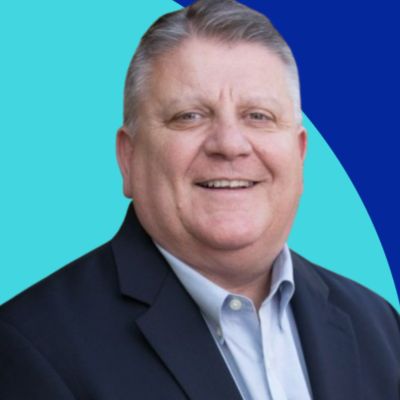
President, California Medical Group Management Association


.jpg)