Research hub

Language access research & statistics

Last updated: November 9, 2026

Research and statistics on language access in healthcare, from recognized organizations and No Barrier deployments. Every point of care, from scheduling to pharmacy.
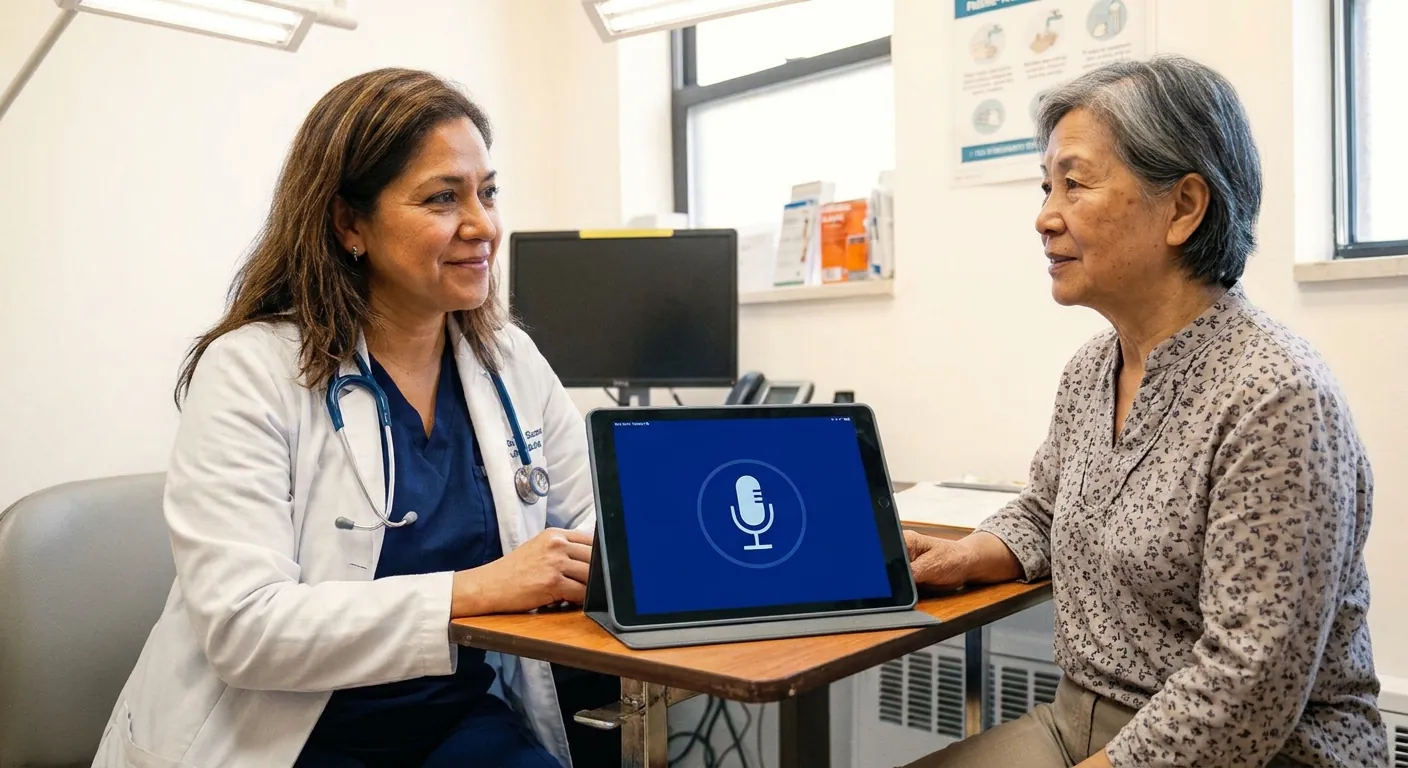
Clinician and patient talking with AI medical interpreting on a tablet

Key statistics

29.6 million

People in the US with limited English proficiency.

GSA, 2025
12.0%

Of LEP surgical patients received discharge forms in their language.

JAMA Network Open, 2024
57% to 66%

Rise in professional interpreter use after a language access program.

BMJ Open, 2024

Every point of care

Where do patients need interpreting?

Patient &Care team
Phone schedulingCall center intake
Front deskCheck-in & intake
Patient historyMeds & allergies
Clinical visitRoutine & complex
TelehealthRemote, at home
Discharge letterBilingual document
Test resultsPortal or phone
Follow-up careAny channel

Exam room

57% to 66%

Professional interpreter use after a language access initiative.

Karliner et al., BMJ Open, 2024

Inpatient

24/7

No Barrier interpreting, including night shifts.

No Barrier, 2026

Discharge

12.0%

Of LEP surgical patients received discharge forms in their language.

Cevallos et al., JAMA Network Open, 2024

AI interpreting research

How is AI interpreting validated?

Each AI language at No Barrier must pass a 90% accuracy threshold before launch. An independent study of No Barrier found it 20% more accurate than traditional interpreting vendors (2024).

Spanish

AI translation of pediatric discharge instructions matched professional translation.

JAMA Network Open, 2025
100

ED discharge instructions translated into clinically acceptable Spanish by an LLM.

JMIR Formative Research, 2026
SpanishPortugueseChinese

Google Translate and ChatGPT-4o non-inferior to professional interpreters for most accuracy domains.

SAEM 2026, conference abstract

No Barrier data

What do No Barrier deployments show?

300+

Medical sites in 17 US states.

30% to 50%

Average reduction in annual interpreting costs.

30%

Growth in clinician patient volume at a multi-location ophthalmology practice.

See use cases

Language access for all ensures care for everyone and happy staff.

Contact us

Frequently Asked Questions

How many people in the US have limited English proficiency?

About 29.6 million people in the US have limited English proficiency, according to the GSA SIN 541930 Ordering Guide (December 2025). Health systems, FQHCs and Community Health Centers serve many of these patients every day. Language access at each point of care ensures care for everyone.

Where do patients need medical interpreting beyond the exam room?

Patients need interpreting at every touchpoint: scheduling calls, check-in, the visit, telehealth, inpatient stays, discharge, follow-up and the pharmacy. Language access at each step keeps the care journey connected. No Barrier provides AI-first medical interpreting in person, by phone and by video in the same interface.

How is AI medical interpreting validated?

Each AI language at No Barrier must pass an internal 90% accuracy threshold before launch. An independent academic study led by Michal Schuster evaluated No Barrier and found it 20% more accurate than traditional interpreting vendors. Each health system then defines AI use under its own policies and approved use cases.

Do patients with limited English proficiency use telehealth?

Yes, and use grows after the first visit. In a Kaiser Permanente study in JAMA Network Open, 29% of patients needing an interpreter chose video for a first visit, compared with 36% of other patients. After a first video visit, the figures were 47% and 49%.

How much can health systems reduce interpreting costs with AI-first medical interpreting?

No Barrier clients reduce annual interpreting costs by 30% to 50% on average. Community Clinic NWA reached 63%. No Barrier runs on a flat monthly subscription that replaces per-minute billing. Language access becomes a predictable budget line instead of a cost that grows with patient volume.

Last updated: November 9, 2026