In this episode of Care Culture Talks, host Eyal Heldenberg speaks with Diana Erani, Chief Operating Officer at the National Association of Community Health Centers (NACHC). With experience spanning from Health Care for the Homeless Houston to state and national leadership, Erani offers a comprehensive look at how community health centers serve 32.5 million Americans, one in ten, across 1,500 centers and 16,000 sites nationwide.
Community health centers are uniquely patient-governed: 51% of board members are patients, ensuring that care is designed around the communities it serves rather than around administrative assumptions. That model extends beyond primary care to include behavioral health, dentistry and other services, creating a one-stop care environment that is both more accessible and more cost-effective than traditional emergency room visits.
The conversation goes deep on language access. Health centers routinely serve populations that speak 50 or more languages, and Erani is direct: certified medical interpreters are non-negotiable, particularly for sensitive behavioral health conversations where family members cannot substitute for professional interpretation. Technical reliability and accuracy are equally non-negotiable. A provider who cannot trust that the interpretation is correct cannot practice safely.
Erani also addresses the operational reality: language access cannot stop at the clinical encounter. It must be integrated across the entire patient journey, from the first phone call through follow-up care. No Barrier supports that full journey with 295+ language access options on demand, human oversight auditing AI encounters and a custom compliance layer that health systems can build their own protocols on top of.
The episode closes on a forward-looking note. National organizations like NACHC play a critical role in accelerating adoption of language access solutions by creating shared learning environments across the health center network. As Erani puts it: stronger together.

Care Culture Talks, No Barrier
Care Culture Talks, No Barrier
Care Culture Talks, No Barrier
Care Culture Talks, No Barrier
Care Culture Talks, No Barrier
Care Culture Talks, No Barrier
Eyal Heldenberg (00:10)
Hi everyone. Welcome to Care Culture Talks. My name is Eyal Heldenberg. I'm the CEO of No Barrier, an AI medical interpreter for healthcare providers. I have the honor to be with Diana Erani for our third episode. Diana, how are you today?
Diana Erani (00:26)
Great, excited to be here with you.
Eyal Heldenberg (00:28)
All right, perfect. So we'd love to discuss with you, Diana, on different topics around healthcare, culture, language and more. And if you don't mind, could you share with us a bit your fascinating journey in healthcare?
Diana Erani (00:45)
Sure. So I am the Chief Operating Officer at the National Association of Community Health Centers. And the way I started out was my first job in community health was at a place called Health Care for the Homeless Houston, which was a community health center in Houston, Texas, working with the homeless population to provide them health care.
So I worked there for a few years, starting as clinic manager and then going up to chief operating officer where I learned all about the needs of the homeless population, how to care for them, how to be what we call culturally competent, meaning to treat them in a way that works best for them instead of what we think they would want to ask them what they would want and to be successful.
in making a big difference in people's lives. I then moved to Massachusetts where I am originally from and I joined the Massachusetts League of Community Health Centers. That is the statewide association for community health centers. It has approximately 52 community health centers across the state serving one million patients or about one in seven people in Massachusetts. And I worked
starting off in the Health Informatics Division and then I became the Chief Operating Officer. And then just six months ago, I left that job to become the Chief Operating Officer at the National Association of Community Health Centers, where I work with the 1,500 community health centers across the country that serve people in 16,000 different sites. We serve 32.5 million people
or one in ten Americans.
Eyal Heldenberg (02:46)
This is amazing. It's quite a journey. It's a lot about community, center, health and what initially drew you to that specific direction.
Diana Erani (02:58)
Well, I'd worked in healthcare before, but I really liked the idea of the community health center. And the reason I liked it so much is community health centers are unique because 51 % of the board are comprised of patients. So you really have the community driving what the health center does. And it doesn't just stop at primary care. It includes behavioral healthcare, dentistry, ophthalmology, and many other services all in one.
stop so that people can truly get care in their community.
Eyal Heldenberg (03:34)
And in your recent role in NAC, what excites you most about this national responsibility?
Diana Erani (03:43)
Well, what's really exciting is that community health centers make up the largest primary care group in the country because they're all across the country and they seek to...
provide the kind of healthcare that people can have successful outcomes because they work to understand where the patient is at and what would be helpful. And they have higher successful clinical quality metrics than a lot of traditional medical practices and they do it for less cost. So it's an exciting place to be and we're looking to the future where we see a growth of community health centers.
is to serve one in three instead of one in ten.
Eyal Heldenberg (04:30)
Got you. Maybe let's talk about the model of community health centers. Why do people seek, know, they address those centers instead of, you know, going to emergency rooms or other traditional services?
Diana Erani (04:48)
Well, they're designed to set up to make people comfortable. So what we call them is culturally competent, meaning understanding the culture so that people would say, I know if I go to the community health center, I'm going to be in a place where they welcome me. They have people that look like me. They have people that may speak my language or if not, they're able to get access to interpretation. And they have a lot of other
patients like me. And so what that does is bring people into primary care so they could be treated in a more cost effective but also healthy way for the patient. So they don't have to wait until they're very sick and go to the ER. Instead, they feel comfortable coming into the health center and having someone work with them to manage their illnesses, give well visits to their children, and at the same time, you can get your tooth filled.
Eyal Heldenberg (05:48)
All right, so you mentioned that those centers are by design, culturally competent and support, for example, language and non-English speaking patients. Can you walk us through how those language access programs typically work across those centers and in different touch points within those centers?
Diana Erani (06:12)
Sure. So community health centers are designed for anyone who walks in the door to be treated. So it doesn't matter where you come from or what language you speak. You come into a community health center and they're going to welcome you. So the first thing that they would do is talk to the person at the front desk to say, you know, hello, my name is so-and-so. I'd like to see a doctor or it could be over the phone or even now online.
So if it's online and they don't speak the language, online portals are very rarely in anything other than English and Spanish. So that would be very problematic. So then you have the phone call. The phone call will go into a call center at the health center. And if they have the person available that speaks the language, she'll speak with them. But often they do not. Some health centers see patients in more than 50 different languages.
They will then turn towards an interpretive service to treat them. And similarly, if they walk into the health center, the front desk person will assess if they need an interpreter or not. And then that person has to go activate the process for looking for an interpreter.
Eyal Heldenberg (07:26)
Got you. And those medical translators are either employees or maybe from remote or iPads or iPhones, right? Something like that.
Diana Erani (07:37)
Yeah, so whenever someone has a visit they need to have a certified medical
translator, we don't like to use family members because they don't translate things accurately and they may not communicate things as directly as needed because the doctor needs information they might not want to share in front of a family member. So we always look for a certified interpreter. If there's none available at the community health center then they turn to
a company that they would have a contract with for a language line.
Eyal Heldenberg (08:15)
I guess this is something you as a provider must comply with. You need to bring this service, otherwise you won't be able to communicate with the patient. You just need to do it, right?
Diana Erani (08:29)
Yeah, it's not like there's an option to turn the patient away. That's not something that anyone would do, but you're also not allowed to do it. it's imperative for the health centers to be able to have access to language translation.
Eyal Heldenberg (08:45)
Yeah, it makes sense. You know, we talked with many providers and operational managers and there are pros and cons to this, I would say workflow to this operation. I wonder if you can mention some of the pros and cons of using or implementing those language plans in the community centers.
Diana Erani (09:06)
Well, when they work well, it's wonderful because then the patient feels heard, they feel understood, they can ask questions about their healthcare, they can ask questions about a lot of things they just may not be familiar with that other people may take for granted, like how to go to the pharmacy and get medications. But they can also be difficult because when it's not working well, the provider or the doctor will be standing there with the patient waiting
for someone to come on the line. The person that comes on the line may speak the wrong dialect and it won't be helpful because they can't translate or they'll translate incorrectly. Sometimes you have to put the patient back in the waiting room and it can take an hour to get someone for their language. And then of course how do you get that information into the medical chart?
That's the other question. It can't just be voice translation, because if you try to put that into the medical chart, there's one more barrier between the actual translation and the way it's documented.
Eyal Heldenberg (10:16)
Gotcha. All right, perfect. So those community centers, they serve different, I would say, specialties. We were talking with different providers and one of the main, I would say, topics was around private conversations more on the behavioral health. I wonder if you could have some insights on those specific sensitive conversations.
Could you elaborate how a third party medical translator is involved or influences the encounter?
Diana Erani (10:55)
So having a translator again is so important here because you really don't want to use someone from the community. You really don't even want to use someone from the health center if it's a small health center because they might know the person or they might know the person's relative or friend and it's too close and people won't feel comfortable discussing things. Similarly, a lot can get lost in translation if you don't have the right translator and people may ask the wrong questions or be very shy about sharing
sharing certain personal details, but without having that knowledge that you really can't treat the patient well, and there could be something big that you're missing. So you need a really good solid translator that can also let you know if the person is...
Maybe they're answering a different question than you ask them. That's very common. So you have to be able to understand right away if you need to rephrase the question so that you get the information that you need to treat the patient.
Eyal Heldenberg (11:56)
Yeah, we also heard, like you mentioned, that specific in mental health, is more, I would say, sensitive topics could be around shame, different thoughts, sometimes around sexual or drugs or addiction or any other really sensitive topics where you need to discuss and you need to kind of elaborate and you need a professional
assistance there and an interpreter could come and you know as a help on that front.
Diana Erani (12:35)
Yeah, very much so because let's say you're talking about someone who may have a substance use disorder. You need to really be able to drill down into the details and make sure that they understand the questions. So you could say, you know, maybe...
you ask them, you know, do you drink every day? And you would have to ask them more specific questions like how much alcohol do you drink a day? That might not be the same to someone to say like, how much beer do you drink a day? How much wine? How many, you know, shots of vodka or whatever it is. So you need to have that very specific language so that you can provide the right information so it could be understood.
Also, even with other types of thoughts like people that might want to hurt themselves or are thinking that they're very depressed, like that can mean different things. So you need to have precise language so people can understand what they're dealing with.
Eyal Heldenberg (13:34)
Yeah, yeah, I wonder from your, I would say, managerial experience and operational experience, what would you recommend health centers when they consider their language access plan strategy, how to develop it, how to optimize it, anything around that operational challenge?
Diana Erani (14:02)
With many things, especially involving doctors, you have to make sure you get it right the first time. They're really not interested in trying something and it doesn't work and you have to wait and then you have to call IT and then the patient's waiting and then their other patients are backing up. They really don't have a lot of...
ability to wait on technical and other glitches. Similarly, if the translation isn't very precise, they're not going to be able to understand or get the information they need. You know, if a patient says, have a pain, you need to be able to say, you know, is that pain dull? Is it throbbing? Is it stabbing? How long has it been there? Is it, you know, over here in your body or over here on your body? Does it come when you drink or exercise or, you know, there's many, many questions.
and if they don't have that very easily available, it makes it hard to treat the patient. So you have to have both the competency and the technical know-how to make sure that it happens smoothly. That's the number one thing. And then the number two thing is it has to flow past the doctor into the rest of the health center smoothly. They have to understand...
what topics were discussed so that the people that bill for insurance will understand what they can bill for and what was or wasn't covered. The people who need to make follow-up appointments in the call center will need to understand what specialists they need to find for the patients. then the patients communicators, a lot of them have what we call community health workers that reach out to them to check on them. How are you doing? Are you eating?
right, do you have your medicine? They also need that translation to be correct or they'll be asking them about the wrong thing.
Eyal Heldenberg (15:57)
Gotcha. So basically you say this is a probably a mixture of training the providers that they're placing themselves to kind of be aware, be minded and not to compromise on that. And on the vendor side, you mentioned two factors. One is fast access, like access to care, and also insist on the quality of interpretation to make sure that the vendor has
the right workforce to make sure those messages are interpreted from English to the other language correctly. Am I right? Those are the two metrics that you mentioned?
Diana Erani (16:39)
Yes, if there's a bad translation, then you'll lose faith in the product and that'll be the end of using that product because it's so important to get even the smallest details right. things are called different things in different languages. So explaining something like lightheadedness versus dizziness, you're going to have to make the interpreter will have to make sure that you have the right words for that. So you get the right information.
Eyal Heldenberg (17:08)
Yeah, it makes sense. Perfect. So looking forward to the future, know, lots of things are going on right now with technology. I wonder what role can national organizations play towards the future? We know there are many health care challenges all over the place. I wonder, like, how do you see the national organizations' role in that?
Diana Erani (17:37)
So the national organization strives to make it as easy as possible for community health centers to treat the patients in their community. So for example, we have big conferences, four of them every year, where people come together and we learn from each other. We'll say something like, let's have a session around who's using AI to...
use for interpretation or describe or whatever and then people will come together and talk about what's important to them and what their experiences have been.
So that's one example. do that with many other things like who has had success treating people with diabetes in an urban setting who don't have access to fresh foods. And that will be another topic where people will share together. So it's the sharing together of what is working and what is not working. And at the same time, understanding that the community health centers themselves are very different. There is a saying, if you've seen one community health
Center. You've seen one Community Health Center. It's very different and some of them are early technology adopters and willing to try things and if it doesn't work try something else. Others are not interested in trying something until it's been done for a few years and everyone in between. So that's another way that coming together nationally can share that information.
Eyal Heldenberg (18:45)
Hahaha.
Nice. Those collective mind sharing, those forums, those events from time to time get people together and learn from each other on different workflows and amazing. Maybe last question for this podcast. What gives you hope about the future?
Diana Erani (19:30)
Well, I have a lot of hope about the future and I think it's because when you work with your own community to improve and to make people better then you're definitely going to succeed because if each place is different each person is different But when we all have the same goal of making each other healthy Not just treating the sick but preventing sick sickness That's when I think that
Everyone working together will make a big difference. We have a saying, we say stronger together.
Eyal Heldenberg (20:03)
Amazing.
Amazing. So then Arani was great to host you in our care culture talks podcast and appreciate it. Thank you.
Diana Erani (20:14)
Thank you.
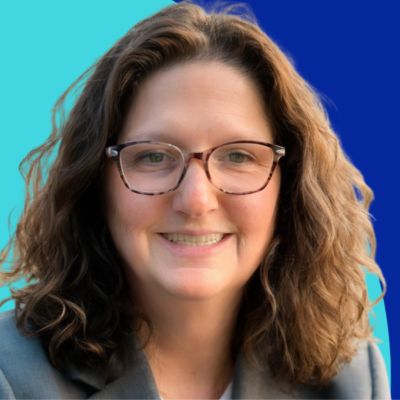
EVP & Chief Operating Officer at the National Association of Community Health Centers


%20(10).png)